
Previously on You’re A Better Artist Than You Think:
Amy Lewis talked about establishing a freelance animation career from Europe, the most devastating rejection of her career and the amazing opportunity that followed.
Here’s where we we left off…
How To Listen:
Listen to the interview via the YouTube player or subscribe to the audio podcast via Apple Podcasts, Spotify, Audible, Email and most other podcasting platforms…
This is the second in a two-part series.
[UP NEXT: Graphic novelist and literary agent Tori Sharp on the challenge of creating honest art…]
…Or Read The Transcript:
Amy: That being said, I’m very, very happy on SpongeBob and I have no desire to move away from SpongeBob anytime soon. I absolutely love it.
Chris: So, then how would you describe your current work compared to that very colorful description you gave us of your, uh,[LAUGHTER] of your work circa 2016?
Amy: Oh god…
Yeah, if you put it side-by-side I wouldn’t say it was from the same person.
Um…
Chris: I would call it confident.
Amy: Yeah. Yeah. Thank you. Yeah. Much more confident, much more confident.
I think I know what I want to say in my paintings.
I know what feeling I want to get across in a painting.
…and then I go and, I do my best with the skills I’ve learned.
…instead of just throwing colors at the page and sort of smudging things and like, “Yeah, there you go.”
The Struggle Of Self-Critique:
Amy: I do feel that I’m very, very critical of myself though.
I mean, I am extremely critical.
You know, I see so many amazing artists on Instagram and sometimes I just have to shut it off because I feel shit.
I’m like, “Oh my work is nowhere near as good as theirs. How the hell do they do that?”
In a way, I’m glad they’re there because my dad always used to say, “If you’re the best in the room, you’re in the wrong room.”
I like to look at and surround myself with artists who are a lot better than me, so then I can grow to be as good as them.
Yeah, I like my work. I do like my work. I’ve learned a lot in this past eight years, but I feel like I’ve got a lot more to learn and a lot more to give.
…and I know that if I carry on giving my all and just enjoying it, that’ll happen in time.
I’ve been trying to teach myself oil painting because I’ve been doing watercolors since the age of nine and I love that. I could paint that forever.
…but oil is very different for me.
It’s a very, very backwards way of thinking of applying the paint compared to watercolor.
I just love the vibrancy you can get with oils and the textures and, just the depth you can get.
So, in my spare time when I can, I’ve been trying to do little oils.
…just to dabble in that.
Chris: …and about that, Amy.
This is a good example. I’m glad you bring up the oil paint.
Amy: [LAUGHTER]
Chris: I had a note here to ask you about this idea of self-critique.
There are these times where you’ll get kind of weighed down by that sort of discouragement that you were just describing…
Amy: Mmhm.
Chris: …where the comparison gets a little out of balance and you kind of get into a funk or whatever, like…
I think just about every artist alive deals with that.
Amy: Yeah.
Chris: That does happen because you’re normal, right?
Amy: [LAUGHTER]
Chris: You’re a normal human person.
…but you don’t stay in that.
You have this way of rescuing yourself from it.

…and I think a really good example – a recent example – is this oil paint thing.
Because…
Amy: Yeah.
Chris: It wasn’t long ago you were ready to throw the oil palette and brushes out the window.
[LAUGHTER]
You were so frustrated…
…and we had several conversations about that and I tried to share what I know…
Amy: Yeah.
Chris: …about oil painting.
…and I remember thinking, “Oh, it’s fine. She does like four-hundred things, you know?”
Amy: [CHUCKLES]
Chris: “She doesn’t have to do this.”
It’s like, “It’s alright. It’s gonna be fine.”
…and then (whatever it was) a couple weeks later, you sent me a photo of a work-in-progress.
…and it’s like, “Yup still at it!”
…and I’m like, “Yeah oh, well, of course you are.”
Amy: [GIGGLES]
Chris: …because that’s what you do.
You have this way of rescuing yourself from it.
Can you talk about that?
…where that came from, or how you do it?
Amy: Yeah, sure.
So, with me, I have a very short temper.
So I’ll try something new and it goes wrong like most new things will.
I have a big paddy about it.
Chris: [LAUGHTER]
Amy: I get really upset. I go on a long walk, go for a run, leave it for a week.
…and then I think, “You know what? Sod it. I’m going to come back to it because it can’t be worse than that.”
You’ve done it once.
You’ve taught yourself how not to do oils, now do it the other way.
I love painting so much, and I thought, “Look, if you can paint watercolors, which is, apparently, the most difficult type of paint to paint in, you can paint in oils. It’s just a bit different.”
…and I just said to myself, “You’re an artist. You are a painter and you can use these oils. You might not be able to use them now but you will be able to. So just stick at it.”
It just intrigues me how these artists I see on Instagram and other places, how they create such beautiful works.
…and I thought, “Well that’s not happened overnight, obviously.”
It took me from the age of nine to (nine to seventeen) to really get a good handle on watercolor.
…and that’s quite a long time.
…and I’ve only been dabbling in oils for a few months now.
I’ve done about four paintings in my spare time.
So it’s not a lot.
…and each time I’m getting better and I’m learning things.
I keep a picture in my mind like, “Okay, this time next year, I want to be able to paint, like, such and such person.”
…and I just sort of set a goal for myself.
…and I think, “I might not be able to do it now, but give it time and effort and it’ll happen. It’s just not gonna be overnight.”
Growing Confidence – Brass Bands And Bullies:
Chris: …and where did that come from, do you think?
Amy: I think that came from playing a brass instrument from very young.
My mum and dad are brass players.
They met through brass bands.
So my mum plays cornet and tenor horn and my dad plays cornet and trumpet.
…and they got me into playing a brass instrument at age seven.

I played cornet at first and I remember meeting the teacher that taught my mum. He came in that first day – into school – because he used to come into school and teach people.
…and I was the only brass player in the entire school. It just wasn’t a thing.
…and he went, “Let’s have a look at your teeth then.”
So I opened my mouth and he went, “Yeah, big teeth. You’ll be fine.”
I was thinking, “Alright, I’ve got big teeth, have I?”
So, [LAUGHTER] I remember my first note…
My first note just sounded like a fart.
It was awful.
[LAUGHTER]
…and I remember thinking, “My mum and dad are really good and they took ages and they’ll be really proud of me if I, you know, carry on in their footsteps.”
So I just carried on with it…
…and had a shit time at school (primary school) because I was pretty pudgy, and I was bullied for being fat.
…and I just felt like a nobody.
I wasn’t very academically bright at all.
…very, very slow with things.
The only thing I could do was draw, but they never recognized that.
Like, whenever I entered competitions or, you know: “Draw This Character For World Book Day” competition…
I handed my work in and, numerous times, they said, “Oh, well, you can’t enter that because you obviously traced it.”
…and I never did.
I’ve never traced anything in my life.
…and it really hurt me.
…and I thought, “You know what? No one can say that I’m not blowing this instrument.” [LAUGHS]
So, I just stuck with it and it became part of my identity, really.
Chris: Mmhm.
Amy: It took a lot of practice.
…because with something like a trumpet or a cornet, if you don’t practice every single day, the next day you can’t play it very well and your lip just gives up because it’s a muscle.
I was joining a lot of bands.
From the age of seven until nineteen, twenty. I played in brass bands, orchestras, jazz bands, concert bands, the lot.
…and it was such a good opportunity to work as a team with people…
…and I knew that if I didn’t practice, then when we come to practice as a team, the group, we’re going to sound shit ’cause of me.
I think that encouraged me to keep going, you know, the teamwork and being part of a bigger picture.
I feel like that was a really important part of keeping going at something.
Chris: Yeah, that’s great.
…and why do you think you stuck with the brass? Just because of your parents modeling that? Or do you think there’s something else?
Amy: I love the sound of it.
I’m not that much into brass bands.
I’m more into the big bands, you know, jazz and, like, film music.
Chris: Yeah.
Amy: I love film music so much. I love John Williams’ music.
I listen to it all the time on my iPod and I just…
…the feeling that I got when I was playing film music with my friends and we’re making that sound and it was just so much adrenaline and…
It made me feel a little bit cool because…
I know there’s different stereotypes to brass…
I know in American schools, it’s like, “Oh, you’re in the band. You’re a band geek.”
Over here it’s like, “Oh, that’s pretty cool.”
It’s not seen as geeky, which is a really strange thing, strange difference…
I think it was just my way, as well, of getting my energy and emotions out by playing, because you know, it takes quite a lot of puff to play a trumpet.
[GIGGLES]
How Amy Beats The Odds:
Chris: There’s a YouTuber that I love.
Her name is Ellen Brock, and she gives advice for writers.
I found her channel because I was looking for help on my personal project.
I was listening to a video essay of hers today, where she was talking about the odds of having your book published through a traditional publisher like Penguin Random House or something like that.
She said that of course she didn’t think there was a specific ratio (there’s no objective ratio) but that she had heard it’s a one in one-thousand chance…
She’d heard it’s a one in six-thousand chance…
…and she personally felt like one in six-thousand was too harsh and she felt like one in one-thousand was maybe a little more realistic.
…but she said, ‘However, don’t be discouraged because it’s not a lottery.’
This isn’t a thing where you write your name on a raffle ticket and throw it into a hat.
It’s not that kind of one in one-thousand, right?
You can do a lot to turn the odds in your favor.
She went on to talk about craft and…
She didn’t talk about networking, although I would add networking to that as well.
I immediately thought about you, of course, because I was anticipating this interview…
…but I probably would have thought about you anyway, because you are, in so many ways, a living example of that idea.
Think about the odds of being able to be a full time freelancer in animation from anywhere, let alone Europe, right?
It’s the double whammy. Then you’ve got that too…
…and then to be able to break into animation remotely from Europe…
…and also – a third one – you haven’t worked under the roof of a studio in Los Angeles before…
Sometimes people will develop a steady freelance career, but they work in-house first for a few years or ten years or something and then they move away.
Amy: Yeah.
Chris: You’ve defied so many odds, and I think a lot of it has to do with the fact that you are constantly working on ways to turn the odds in your favor…
…and that, of course, shows in your work.
It shows in your fantastic portfolio…
…but it also shows in your attitude and your warmth and the energy that you invest in networking and just the cultivation of meaningful relationships.
You give back.
…just how generous you are…
You are so patient and so generous with people who are trying to do what you do.
Amy: Thank you.
Chris: Anyway, I didn’t really turn that into a question, but I wanted to throw that out there and just see what you thought about that.
The Vitality Of Networking:
Amy: Yeah, the networking thing…
I didn’t mention that.
That was so important because a big thing that I’ve learned in this industry is, of course, it’s what you know. Of course it is.
…but it’s also who you know.
Massively.
Back in 2018, I heard of CTNX.
…held in Los Angeles and one of the biggest animation expos there is.
…and I was like, “I’m going to go because all the big names are there, the big studios are there all in one roof and, yeah, I’m going to go and meet people.”
…and I remember going for the first time.
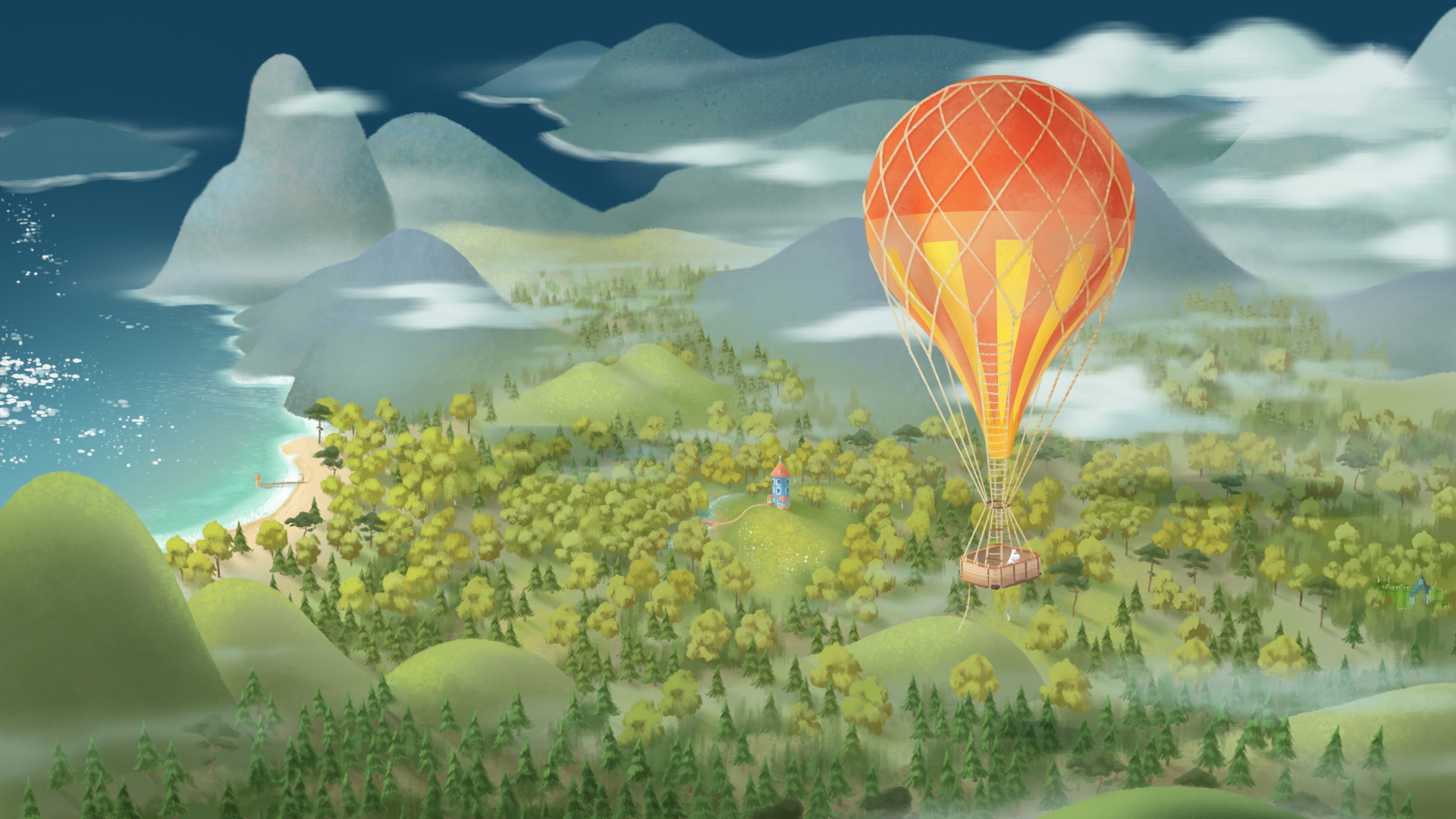
I remember applying for this thing called “Raise The Bar,” which is where you can submit some of your work and then the studios (before the event) go through and just pick who they want to interview for potential jobs in the future.
I did. I got [called] back.
…and I couldn’t believe it because it’s not a lot of people get called back.
I was like, “Okay, great!”
I went in.
I think that was one with DreamWorks that year.
…and there were a few more. I forget which ones.
…because every year that I’ve been now, I’ve had about five studios talking to me about my work.
…and it’s great to put a face to a name.
I feel like, if you email someone from England over in America…
…and, you know, applying for a job, “Hi, I’m Amy, blah, blah, blah…”
…the dynamic’s so much different when you’ve met someone because it’s like, “Oh, hi. It’s great to see you at such and such…”
Amy: You just have an instant rapport and they know who you are.
“Oh, Amy, I know Amy. I’ve seen her. We’re friends.”
It helps.
…and I have got work from CTNX.
I’ve had work with Wildbrain, doing background paintings, all from just being there, showing them my portfolio, and them like, “Oh, we’ll email you. We’d like to work with you on such and such.”
I wouldn’t have got that if I hadn’t have gone.
But also, you don’t just meet the studios and people working there, you meet other artists as well.
…who also know people.
You never know who the artist sat next to you knows.
It’s invaluable to go and put yourself out there and get involved, because the more you’re seen, and the more your name gets around, the more chances you have of being hired from a list of names that they’ve never heard of or never seen.
…because they’re like, “Oh, I know her.”
Happy Little Trees:
Chris: How about other ways you’ve figured out how to tip the odds in your favor?
Amy: What I do is (it’s really weird)…
I’ve got this obsession with trees, Chris.

I don’t know what it is, but if I’m stuck…
…because I get artistically stuck a lot, like…
I have this great idea or I think it’s a great idea…
…and all these sketches in my head.
…and then I get things down and think, “Yeah, this is gonna be a great piece!”
…and then I start it and it’s absolutely awful.
…and it happens a lot – like on a weekly basis.
…and the way that I get out of that is I go outside and I paint a tree.
I just paint trees.
I took my iPad to Tatton Park, stood there in the middle of this field for three hours, and now my feet are full of bites because something was feeding on my feet.
[LAUGHTER]
But uh, I feel great, you know.
I feel so inspired from drawing all them trees.
…and I don’t know why, it’s just…
It sort of sets something free in me when I’m painting trees.
…but yeah, next time I think I’ll take some better shoes.
Amy’s Current Mindset:
Chris: In a word, describe your current mindset vis a vis your artistic craft.
Amy: Hmm…
Wow, one word…
Confident.
Chris: Mmhm.
Amy: I think there’s definitely a confidence there that has grown over the past few years that wasn’t there before.
You know how some people have styles – a specific, distinct style?
Like Loish…
…and I don’t think I’ve got a style.
I really don’t.
I think I’ve got a few different styles, and that you wouldn’t really know who did it if you looked at it.
…but I think that’s just the way that I paint trees.
It just happens.
It’s like handwriting.
It’s specific to you.
…and I think, “You know what? Just roll with it.”
I’ve tried to change my style (my natural way of painting) so much because I’ve wanted to be like other artists.
…but, for so long, I’m like, “No, look, this is the way I paint. This is how it comes out.”
…and, actually, I quite like certain things about it.
So I’m just gonna roll with it.
…and I just trust in myself now and think, “No, I know what I’m doing.”
I know what I’m doing.
So, whatever I’m doing now, I know I’m doing something right.
…because it’s resonating with people.
…and I’m getting a feeling across at the end of the day.
So I’m just going to roll with it.
It might not look like such-and-such-a-body’s work, but this is my work.
Evaluating Amy’s Old Portfolios:
Chris: …and so, in a word, describe what you thought was strong about the work before.
…back in pre-2016.
Amy: This is hard, you know?
What’s a word that’s like sort of in between desire and ambition?
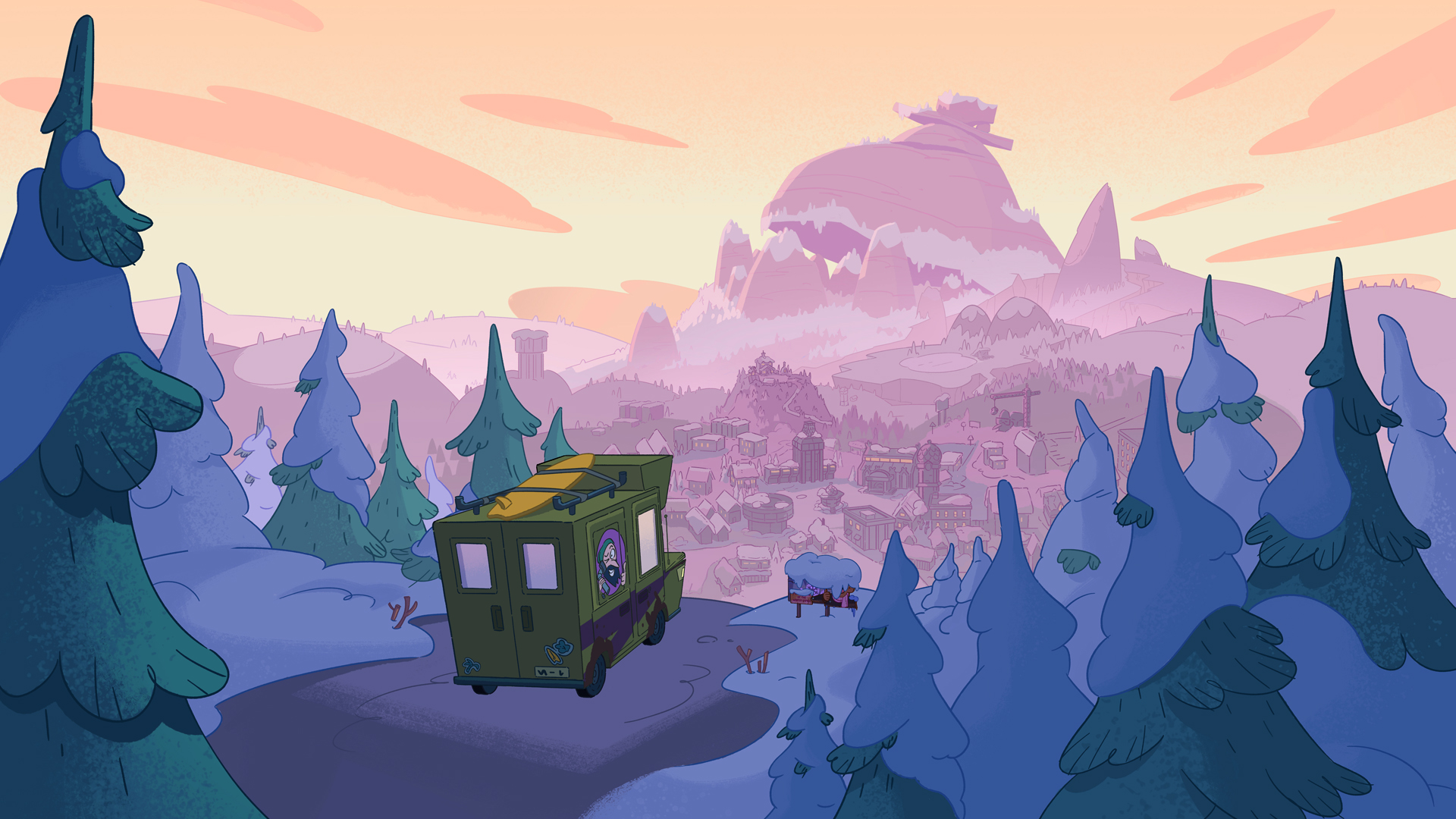
Chris: Hopeful.
Amy: Yeah, kind of hopeful…
…um, but also um, determined.
I knew I wanted to get somewhere, but I just didn’t know how to do it.
…but I think that the work showed that I had ideas and I had some fun with it.
I just needed direction because I didn’t know what I was doing.
Chris: Yeah, so your determination led to confidence.
Amy: Yes, yes, exactly.
Chris: Yeah, I think that’s accurate.
Amy: That’s one thing actually that’s really helped recently.
You very kindly invited me to be a mentor on The Magic Box.
That’s something that’s helped with the confidence.
It was a great experience.
I’ve never mentored anybody before.
You know, I’ve given notes and direction to teammates at work, but not in words. Not in spoken word. It was in written, you know…
….and paint overs.
That sort of thing.
I’ve never actually spoken out loud, live, to people, what I’m doing.
What I’m thinking…
Why I’m doing what I’m doing…
It was very difficult (very, very difficult) for me.
…especially the first week.
…because, you know, I was doing these paint overs and giving notes…
…but there’s like a disconnect between my hand and what words were coming out of my mouth.
It actually made me think about: “Why are you doing what you’re doing?”
…because it’s become so natural to me now.
It’s like talking.
You just do it, you know?
…but that’s helped me understand what I’m doing more in depth now when I’m actually just sat here and not talking to anybody.
I’m actually thinking about: “Okay, so I’m doing this and this is why I’m doing this.”
…a sort of a different way of thinking.
So that’s helped.
The Mindset Amy Recommends For Her Students & Crew:
Chris: What kind of mindset do you think is helpful for your students (your mentees in the course we did together – that you just mentioned – The Magic Box course) and also your crew when you are in an art direction role or a supervisory position?
How would you describe that mindset?

Amy: Willingness to learn.
…eagerness as well.
I can always tell who’s gonna…
Chris: Yeah.
Amy: …learn the most and grow the most because they just show willingness to learn and the want to learn. You give notes and things and they come back a week later and the work is so much better.
…like they’ve taken on board everything you’ve said.
They’ve not just thought, “Oh, well, I might not do that.”
…or just, sort of, half-assed it.
They’ve really gone at it.
So, yeah, determined, eager, willing to learn…
…willing to take constructive criticism.
Chris: Mmhm…
Amy: I know it’s hard.
I hate taking criticism.
…but it’s something you’ve got to do.
…and it’s not…
When it’s in a production…
It’s never personal in the production.
It’s just, you know, what’s going to look best for the production.
There’s nothing about your work.
It’s just: “Maybe this would look better for the show.”
You know?
You just got to do it.
The Best (And Worst) Advice Amy Ever Received:
Chris: What is some of the best advice you’ve ever received?
Amy: In the industry?

Chris: Well, I’ll take any, anything, but certainly that’s, you know…
…part of it.
Amy: One of them I said earlier, which was: “If you’re the best in the room, you’re in the wrong room.”
So, you know, surround yourself with people who are much better than you at what you do.
…because then you can grow.
You’ve got room to grow.
…and then, something else my dad said…
He said: “Whenever you’re in a situation and you’re not enjoying what’s happening, just think to yourself: ‘What can I learn from this?'”
Chris: Mmhm.
Amy: That’s what he said.
So, every time I’m in a situation where, I don’t know…
I’m in a boring talk about something and I’m like: “Oh God…”
…instead of switching off, ask yourself: “What can I learn from what they’re saying?”
…because it makes you listen harder.
Chris: Yeah, that’s really good advice.
…and it ties into what you were saying earlier about your students and crew…
What kind of mindset you look for…
Amy: Yeah.
Chris: …and the worst?
What’s some of the worst advice you’ve ever received?
Amy: Okay, well, the worst advice was: “Everyone wants to work at Disney. Pick another job. Pick another dream.”
Chris: Yeah, that would be one of mine also.
…except, it wasn’t Disney specifically.
It was just “animation.”
…but yeah, I had the same thing.
Amy: I hate that.
It just makes you want to do it more just to prove them wrong.
[CHUCKLES]
Chris: Mmhm.
Yeah, “Follow your heart,” you know?
There really is something to that.
…not necessarily at all costs.
…because everyone’s different.
Everyone’s life is different.
Everyone’s obligations are different.
…but, you know, there’s strength in that.
I remember Jenn Ely saying on my podcast years ago (and I’m not quoting verbatim here) but this is basically it…
…she said, “This industry is too difficult to not love it.”
…and you gotta love the work.
…doesn’t mean you have to love the work all the time.
Amy: No.
Chris: I mean, everybody has a bad day.
It’s still a job.
…but, in general, you gotta love the work.
Amy: Yeah, that’s funny, actually, because recently, I’ve been getting a lot of backgrounds on SpongeBob with a lot of kelp in it…
…because you know there’s a lot of kelp in the sea.
[LAUGHTER]
I’m talking about a lot of kelp.
…and I’m like, “Okay, cool.”
So, you know, I was painting kelp for a couple of weeks.
[LAUGHTER]
…and I was like: “I really want a background without any kelp in it.”
So, every time I open a new background, I was like, opening one eye, like, “Oh, for God’s sake, so much more kelp!” [LAUGHTER]
So, I keep going into the print shop being like, “Can we print some of this page of kelp out again?”
I’m sick of it.
[LAUGHTER]
…but I’m like, “No, Amy, you actually love it.”
It’s just, you know… it’s tedious when you’ve got to paint kelp all over again for like, a month.
[LAUGHTER]
So, yeah. I do love it.
It’s very true.
The Magic Feather:
Chris: Okay, last question…
Our podcast art (at the time of this recording anyway) our podcast art, is an elephant holding a feather.
…and, of course, this is a reference to Dumbo.
We’re not allowed to use Dumbo because trademarks. So we can’t use… [GIGGLES] We can’t use Dumbo exactly. [AMY LAUGHS]
…but it’s a reference to Dumbo – this idea of “the magic feather,” right?
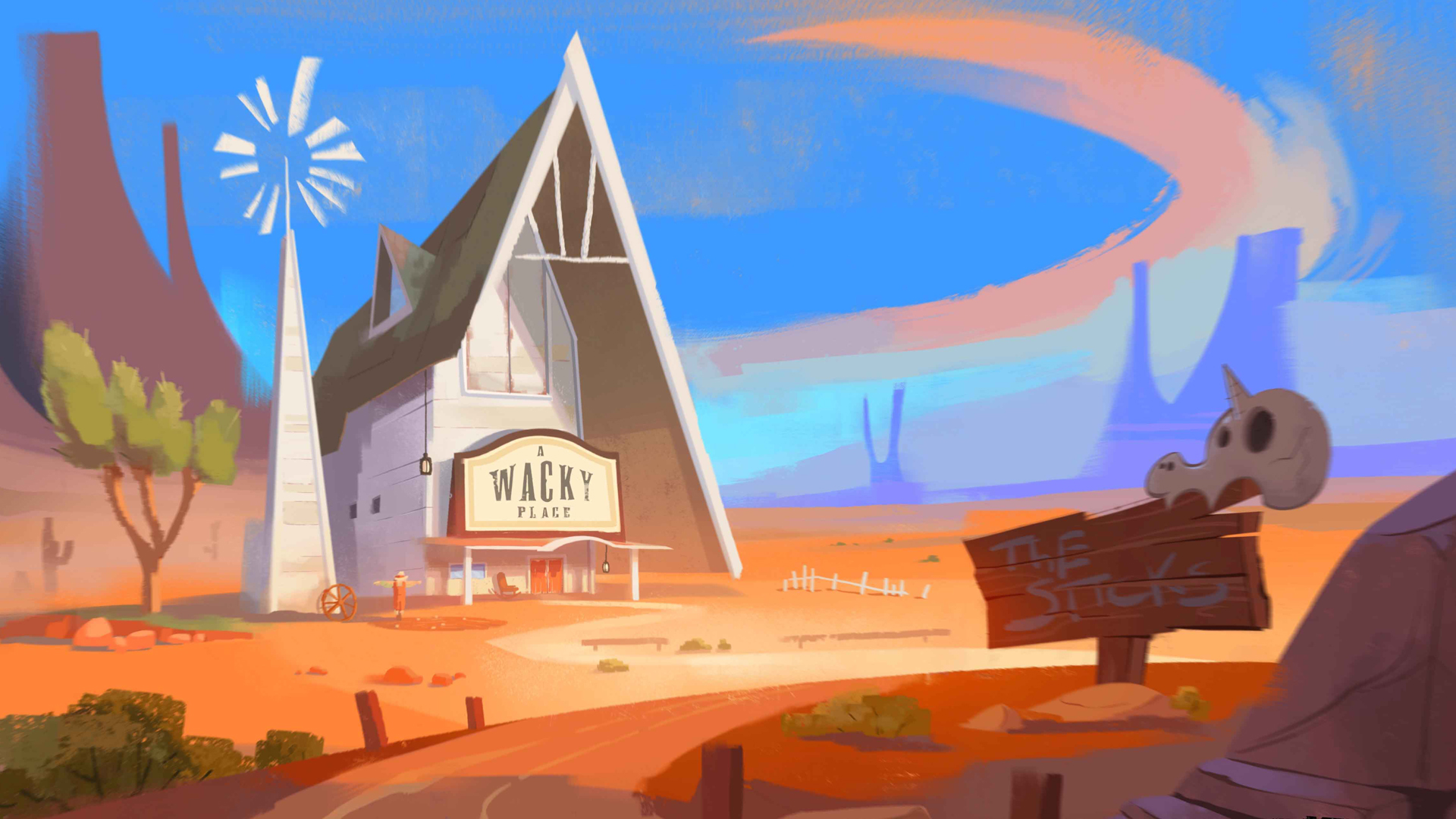
You have this thing that you hold on to.
…and it doesn’t have to be, necessarily, an actual physical object like a feather.
…but, you know, Dumbo had the magic feather.
…and Dumbo thought that it was the magic feather that made him able to fly.
…and, of course, that’s not true, right?
He lets go of the magic feather and can still fly.
It was a placebo, essentially, to create this, uh…
To sort of externalize his fear.
“Okay, if I hold on to this thing, this external object, then I have control.
…and I can not be afraid.
…and then I can do the thing.”
So, again, it doesn’t have to be an actual physical object.
…but when you think about your career in life, as an artist, as a creative person, what has been a magic feather for you?
Something you thought you needed to fly, but then you actually didn’t.
It turns out you didn’t…
Amy: I know the answer to that instantly and it is actually a physical thing.
…and it’s Barry Tomlinson’s paint brushes that he left to me in his will.
He left everything – all his art stuff to me.
Chris: Oh, my…
Amy: Yeah, I was sixteen at the time and it was just…
Yeah, I was touched because he’d been teaching watercolours for decades and he left all of his art equipment to me.
…and he used to make a little notch with a little knife in his, brushes.
…so then everyone that came to his classes knew which were his and which weren’t.
…and I still paint with them now.
I paint with them all the time.
…and before I was breaking into the industry. When I met you. I, obviously, (very obviously about my work) had never painted digitally.
I’d only painted traditional because all I knew was watercolor.
I remember, even like three years into working in the industry, digital painting was still so alien to me and I felt like I couldn’t paint unless it was traditional paint on paper with Barry’s brushes.
…and, since Procreate came out (and that fantastic brush engine), my confidence has grown with digital paint. I’ve realized that I actually can paint just as good digitally as I can with Barry’s brushes on paper.
…because I’ve had to buy some new brushes as well (in different sizes) to paint on SpongeBob.
…and even though they’re not Barry’s, I can still paint.
Chris: Wow. That’s great. Thank you for sharing that.
Anything Else?
Chris: Anything else want to share just as we wrap up here? Any parting words? Other things you feel like we didn’t get to that you want to cover? Anything like that?
Amy: I guess just how this whole industry and all the people that I’ve met and, you know, at The Oatley Academy, people I’ve met from CTNX, people I’ve met on jobs…
It’s just, you know, make the most of your time with these people because they’ve actually become some of my strongest friendships.
Chris: Yeah.
Amy: You are such a great friend.
…and Brian McDonald (even though I’ve only met once).
We talk a lot.
I have so many strong friendships with people and I think that they’re stronger because we’re all artists and we all understand each other’s language, you know what I mean?
We’re all creative.
…and yeah, just enjoy the journey because I, I think I, I’ve been too laser-focused on one goal.
…whereas I should have been enjoying what I was doing and the opportunities I had at the same time.
Chris: Well, thank you, Amy.
Thank you for sharing time and your wisdom.
…and this is just very exciting. I think it’s going to be a great, great episode.
Yeah.
Amy: Thank you for having me. It’s been really great. Thank you.
In Our Next Episode:
Graphic novelist and literary agent Tori Sharp on the challenge of creating honest art…
Every Successful Art Career Is A Collaboration:
Get clear, relevant feedback on your work and personalized career guidance in our mentorship: The Clockwork Heart
Never Miss An Episode:
Subscribe to this podcast on any of the major platforms (Apple Podcasts, Spotify, Audible, SoundCloud, Google Podcasts, YouTube) and join our email list for notifications about future episodes, courses, and mentorship opportunities.
It’s 100% free and we will always respect your privacy.
Credits:
I’m your host, Chris Oatley, and our production coordinator is Mari Gonzalez Curia. Our music is by The Bright Sigh (which is me) and this show is made possible by The Magic Box Academy.
 The Magic Box