
In this episode of You’re A Better Artist Than You Think:
Graphic novelist and literary agent Tori Sharp shares tips on pitching to publishers, how story guides design and the challenge of creating honest art.
Our production coordinator, Mari Gonzalez Curia, who is currently seeking representation for her first original graphic novel, joins me as co-host…
How To Listen:
Listen to the interview via the YouTube player or subscribe to the audio podcast via Apple Podcasts, Spotify, Audible, Email and most other podcasting platforms…
This is the first of a two-part series.
[UP NEXT: Tori talks about stories as “sense-making” devices, urges the importance of “celebration breaks” during long projects and shares her experience as an autistic artist.]
…Or Read The Transcript:
Chris: Tori, let’s begin with your origin story.
Tori: I remember drawing and writing from the time I was very little. I started, probably, writing with poetry and drawing with finger painting.
When it became very personal was in elementary school. I started writing novels, and I would draw characters from the novels. So I wasn’t quite making a comic but, looking back at sketches, all of the skills that come along with storytelling spiraled out from that.
I don’t think drawing on its own would have affected me as much if story wasn’t part of it. It’s really story that’s my first love.
Playing with these characters, seeing what happens with them, and then trying to make sense of life as a whole through that process…
So I was writing novels [LAUGHTER] when I was eight and then, later, in middle school, I discovered comics.
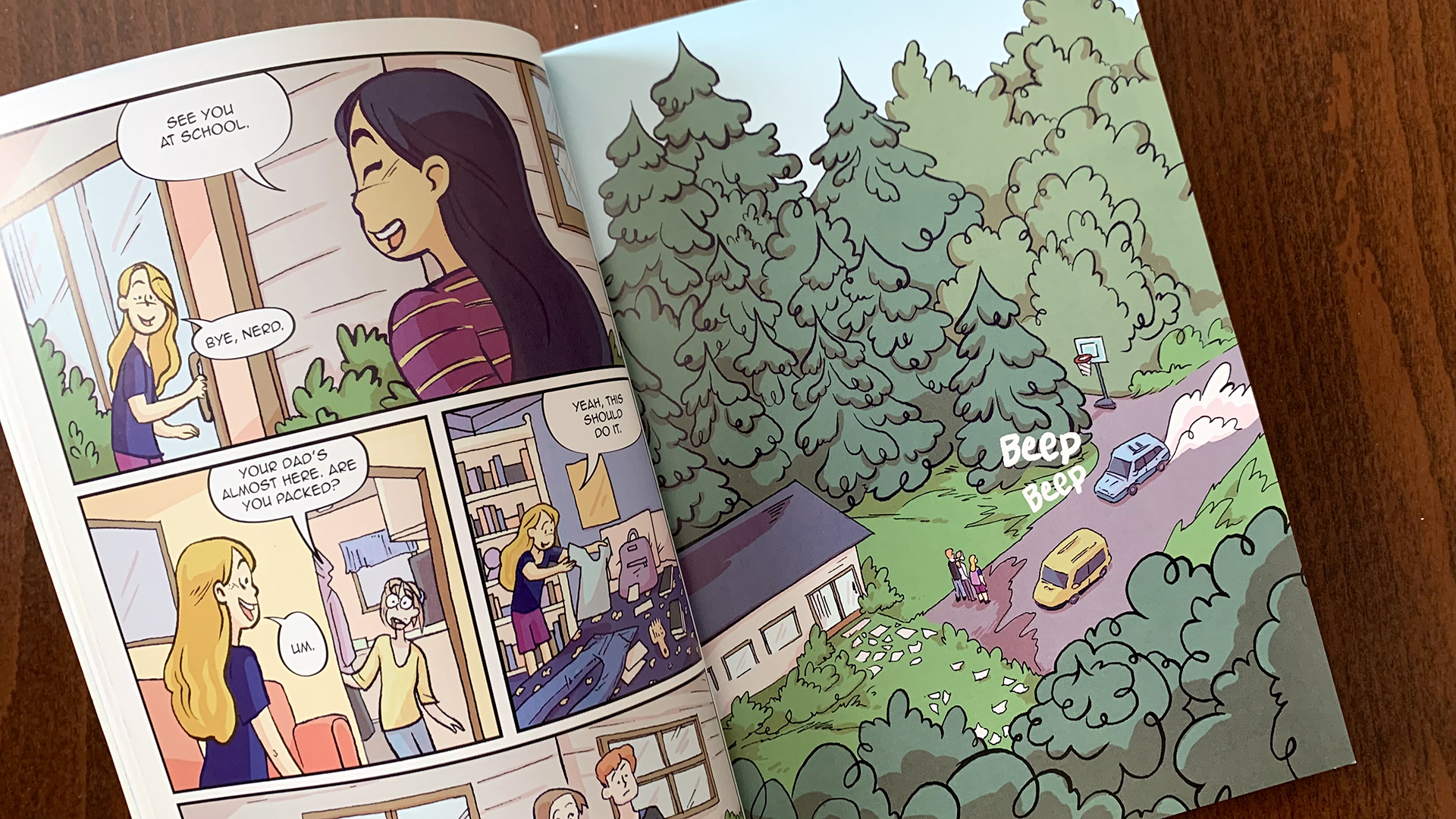
I don’t remember reading comics, really, before I started drawing them, but some friends and I (actually the same friends who are in Just Pretend and a few others), we were making a magazine just for fun.
So I decided to draw some comic strips to go in our little handmade magazine that we would print out and hand out to our friends and teachers in school.
I just started making one-page comic strips of random scenarios (Usually it was our dogs playing together and going on dates and whatever…) just to go in the magazine.
…but it was instant.
I remember drawing my very first comic page and then drawing three more in my dad’s basement and feeling, the “flow state,” probably, for the first time.
…just getting completely into it and entranced and not realizing that time was passing.
Chris: And so you were a teenager at this time?
…or you were younger than that?
Tori: Yeah, when I started drawing comics, I was thirteen/ fourteen and then as soon as I drew those first comic strips, I reached out to some online friends and started co-creating a webcomic with one of them and working on my own webcomics. And this was really in the early heyday of webcomics. So it was good timing that I had that as an outlet.
Tori’s First Comics:
Chris: What were those early webcomics about?
Tori: The very first one was about fantasy creatures in preschool, and there was an evil sorcerer trying to turn them evil.
It was probably very inspired by magical girl anime. It’s very Sailor Moon. The evil sorcerer would drop a crystal into this preschool and turn one of the fantasy kids evil, being like, “These are going to be my future evil army of centaurs and sea serpents,” and things like that.

So that was the one I co-created with a friend, and then I started working on some of my own that were more epic fantasy. Way too large in scope for me to handle when I was fourteen/ fifteen, but still foundational to my taste in story.
Chris: That’s fascinating, too, that it was so fantastical, and yet your work now has a magical realism vibe to it, but autobio or slice of life, kind of in that realm…
Tori: I always have some project in the background that I’m working on. I joke online about the webcomic I’m never actually going to make that I just keep posting character art for.
I love designing these characters and thinking about their stories, and at this point I simply do not have the time to draw out the whole thing. But having characters that are not attached to deadlines who are very magical and I can do anything with really nourishes my creativity.
But also, now that you say it, I had never really thought about how, even when I was thirteen and starting my first webcomic, I was writing younger, like I was writing these preschool characters, essentially.
[LAUGHTER]
So I wonder if that connects to how I write for children now…
Chris: Do you think it does? I mean, if so, how so?
Tori: Probably, yeah.
I like really light and fluffy and wholesome stories. I like the simplicity of children’s media and that you can get a lot of just the raw emotions in it, but keep it very hopeful in a way that might feel too saccharine in older media.
[LAUGHTER]
I have to think more about that though. I’m not sure what drew me to it exactly, but it does feel, sort of, innate that I’m drawn to that.
[LAUGHTER]
Do You Consider Your Work Nostalgic?
Chris: The older I get, the more precious I am with my fandom.
…and, I guess, when I was younger, I thought it would have been the other way around: that I’m a teenager and I’m more geeky and then I get less geeky as I get older.
…but that has not been the case.
…and I know what you’re describing is not fandom and yet there’s something about looking back on your own childhood and recapturing something of your own childhood experience, that is right there on the page in Just Pretend.
…and I have to believe it’s on the page in many ways in Stand Up also.
Is that true, do you think?
Tori: Can you elaborate on that?
Chris: Well, I think i’m trying to avoid saying the word “nostalgia” because the idea of nostalgia is so exploited now by the mainstream pop culture. It’s kind of a messy word now.
Is some pure version of nostalgia informing your work?
…and that could be nostalgia for Sailor Moon, but it could also be nostalgia for a time or a mindset or a certain naiveté we had as kids?
Tori: I think it’s almost the opposite for me.
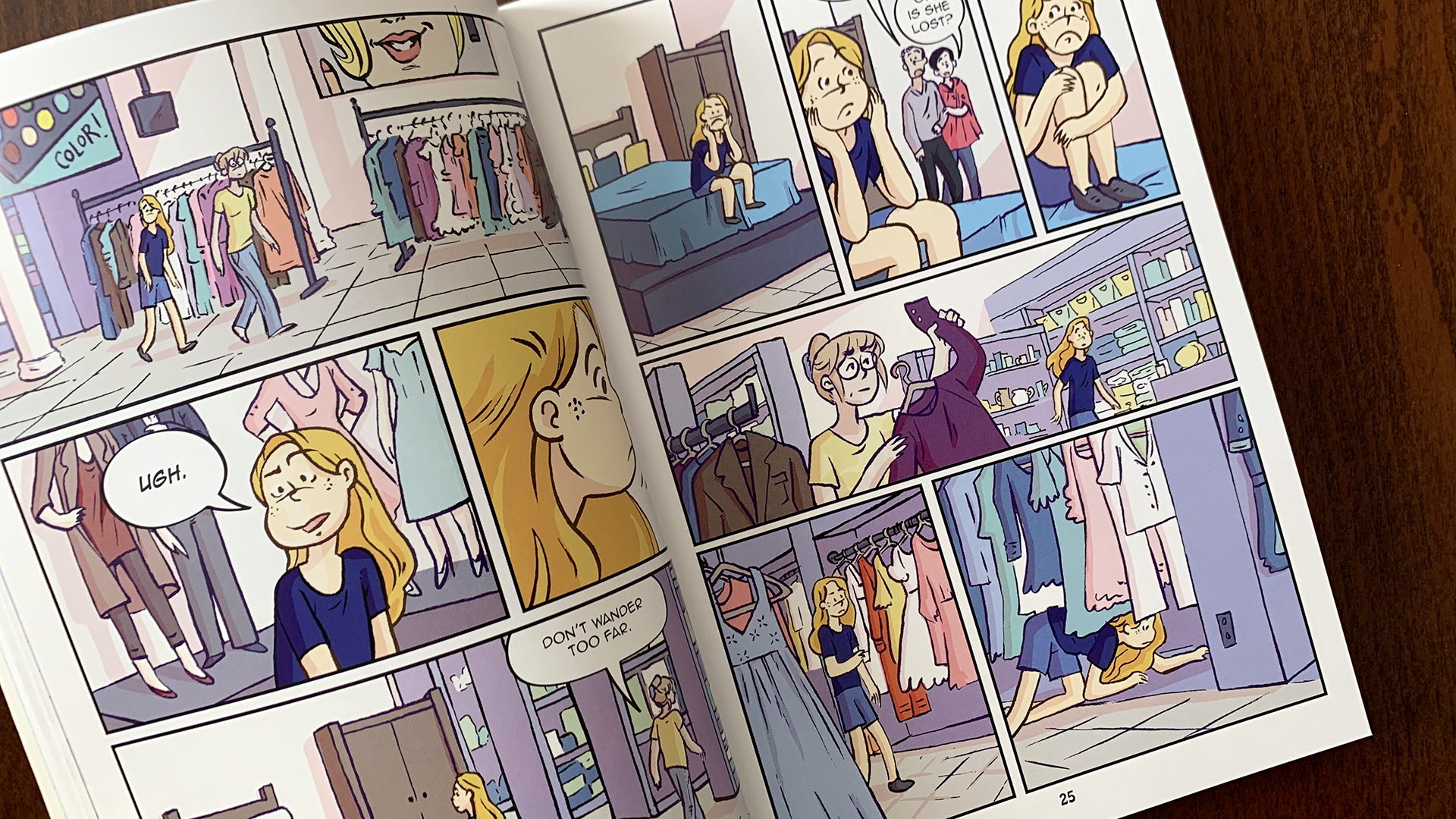
Things back then were so much harder and more veiled than they are now. I feel much more whole and much more able to engage with my interests than I did as a kid.
…and so, I feel like it connects to how I write from theme, in large part from listening to so many of your podcasts when I was learning to tell stories.
So when I think about things in my life that I’ve already processed and come to conclusions about that I can share with people that will help them to thrive, it’s usually stuff from earlier in my life.
The nostalgia for me is more like, “There was all of this stuff happening that I couldn’t make sense of and now I have this secret that would have helped me when I was younger. And I want to share that with people. With younger readers, but also anybody who picks up the book.”
Chris: …which, of course, is the inherent function of storytelling. That’s why stories exist.
…but I think about Stephen King, for example, and I feel like he’s trying to recapture something of his youth in his storytelling.
However, that doesn’t sound like what you’re saying at all.
That’s, that’s fascinating.
Tori: Yeah, I think there was a lot of media in the 90s and the early aughts that I was consuming as a kid that made it seem so prohibitive to be an adult. You turn into an adult and suddenly you’re boring and your life is awful.
It made me, as an adult, who was so much happier than I was in the first half of my life, want to give kids who are also struggling, the idea that being an adult is something to look forward to, largely.
I want them to feel like they can get the knowledge that will help them thrive exactly where they are right now, like they don’t have to wait to reach these conclusions.
But I also want to give them hope that they’re going to be an adult for most of their life, and they will be able to have more agency than they have in the current moment.
There are certainly things that feel nostalgic in a very positive way in my books, especially in Just Pretend. It was really fun to think back about the games I would play and the cookies I would eat and all sorts of very little details that are really comforting.
But, overall, nostalgia is, contraindicated.
It’s, like, the opposite of what I’m trying to do with the books.
I want to give hope for the future instead of comfort from the past.
Chris: Fascinating. Yeah.
It’s just so cool to hear how you have that figured out. Just how resolved that is in your creative vision.
That’s really inspiring.
Tori: Yeah, and I think it’s important that people like Stephen King are doing the opposite. I think we need both.
I just didn’t see as much of what I’m describing. Certainly some of my favorite authors do this as well, [LAUGHTER] and I’m drawn to that kind of work, but it felt more rare and it felt like a conversation that I could add to.
Chris: Yeah, it’s great. Love it.
Coursework Vs. Conversations:
Chris: So, you’re a teenager who’s just started making comics.
Take us from there to the point at which you started going, “Okay, here’s what a career really looks like for me.”
Tori: I was lucky to run into the book The School Story by Andrew Clements, when I was in middle school.
It’s a story about a kid whose mom is an editor in New York and, this kid, she wants to write books. So she writes the manuscript and her best friend and her teacher help her to submit it to her mom anonymously.
So she ends up getting this manuscript picked up by her mother and she’s getting insight into the whole process of being published.
…and I came away from that story obsessed with the idea of working in publishing.
I wanted to be an author, but I also thought that being either an editor or an agent would be fantastic as well.
I feel lucky about that because I am an agent now, and I learned about that career way earlier than most kids even hear about it.
So that kind of planted the seed.
School really doesn’t agree with me. [LAUGHTER] It was not something that I enjoyed, but I got really lucky with the people who were teaching me.
Often, the coursework didn’t do as much for me as the conversations that I had with these teachers. In high school, I would stay after school almost every day for hours just drawing in the art room, hanging out with my teacher.
I would just hang out and talk with him and he was very encouraging. I felt really bolstered by his recommendation that I should be an artist, and I went to art school for sequential art so I got to study comics all through my education.
I was doing a lot of coursework, but I always had a webcomic that I was working on. I was always writing some novel manuscript and working on craft independently.
In art college, you go through a lot of general education and foundational classes that you may or may not need.
There’s [LAUGHTER] always something to pick up on, but there were entire quarters where I didn’t really feel like I was learning very much from my coursework.
It was definitely more self-study and podcasts were a huge part of my education and personal projects.
Understanding Passion:
Chris: Your high school art teacher, what was it about your work or those conversations you mentioned or your paradigm or whatever that he was responding to?
Tori: That’s a great question.
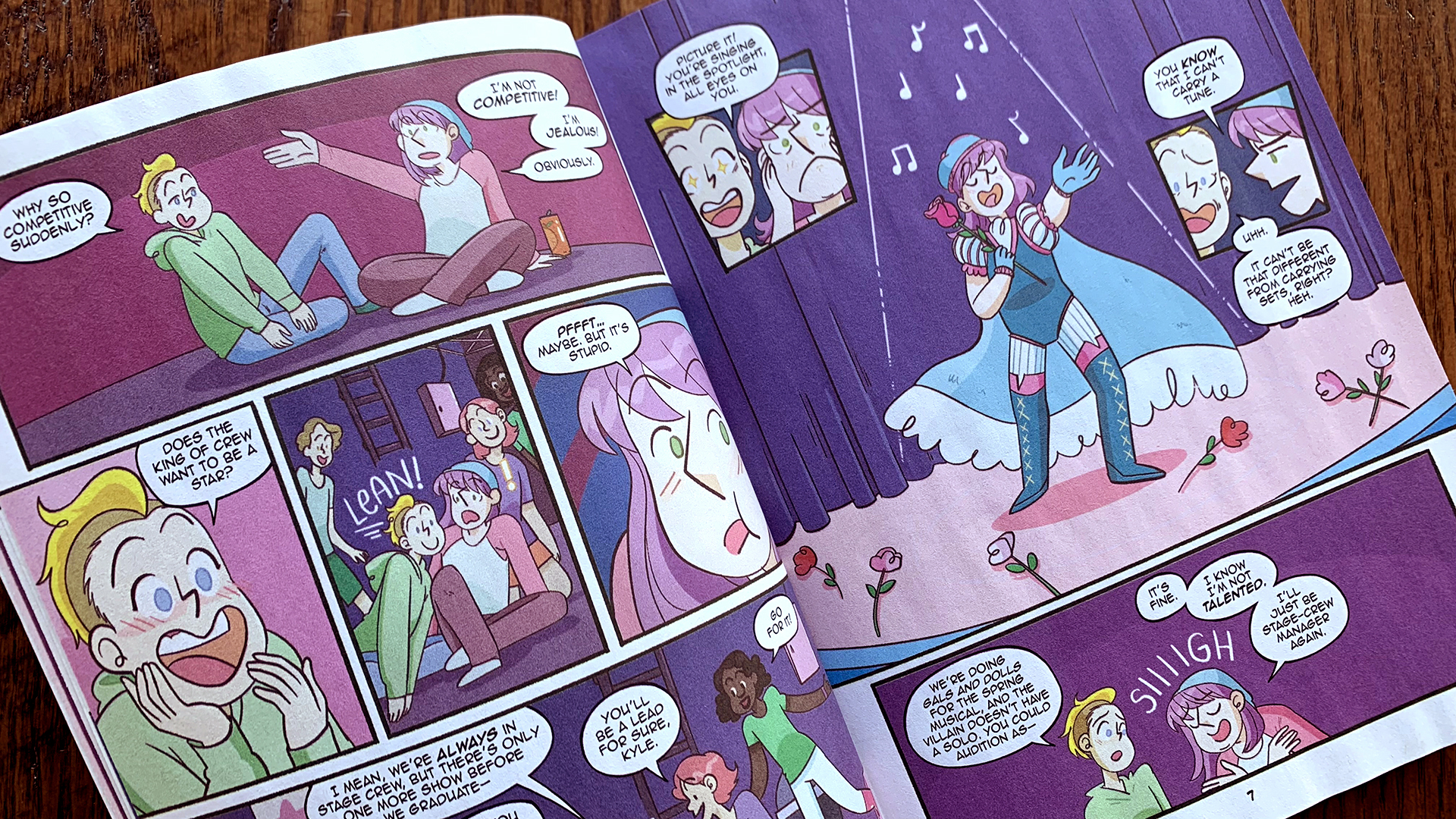
At the time, I think I attributed it to passion. He saw that I wanted, so badly, to do this and was actively choosing on my own to pursue it more than I had to, to complete the classes.
I wonder if he was noticing voice, just having opinions that I was communicating through the work, that I wasn’t just completely viewing the projects as technical applications of the drawing skills that were being taught, but I was consistently trying to essentially write through the drawings.
I was trying to share things about my life or my experiences. I was putting very personal experiences into the work. I’m thinking back about specific projects now from high school, which I haven’t done in a long time, so it’s interesting.
But yeah, I think that was probably what he was seeing. That I was marrying technical drawing techniques, which I was still very much in the early stages, wasn’t particularly better at than other students in the class with this desire to say something [LAUGHTER] through the work.
The Challenge Of Creating Honest Art:
Chris: Do you think there’s a relationship between those two things, passion and voice?
Tori: I think so. I think that people can be very passionate about it, though, and just not learn; not be introduced to the right ideas about how to get their voice into a piece as well.
Yeah, it feels like they must be connected.
[LAUGHTER]
I would need to think more about that too.
What you think about it?
Chris: Well, it’s scary to be honest.
…and I think, often, if not always, passion is the thing that drives us to be honest anyway.
I think that it’s really hard, if not impossible, to make good work without being honest.
Tori: Yeah, and maybe it’s easier when you’re younger. You’re not so worried about perception.
…and then as you get older, that honesty becomes a lot harder to channel.
…and then it’s when you really need the passion to get you past all of the insecurity and the fear of how others will react or whatever personal barrier is keeping you from sharing what you really want to communicate through your pieces.
Chris: Yeah.
Was that ever hard for you – to be honest?
Tori: Yeah, I mean, I wrote a memoir.
…so that was really hard.
Actually, my second book, Stand Up!, the theme of it is about how the things that are important to us are scary.
…that fear is an indication that something is worth doing, often, and it can be hard for us to tell the difference between fear that is indicating that we’re passionate and fear indicating that it’s something we’re just uncomfortable with and don’t want to do.
So, it’s an exploration of this exact thing.
…that when you find your “stage,” you have to be willing to sit with the fear and speak up and allow yourself to take up space and allow yourself to fail on the way.
Chris: Did you ever have moments where you just considered not going through with it?
…with making either book or both?
Tori: Yes.
Once I was on submission with my memoir, I was pretty set.
I feel like it was before that, that I was doing a lot of soul searching about whether this was something that I should pursue.
For a long time, before writing Just Pretend, I had this idea of telling a story about divorce (you know, being a child whose parents are divorced and what that experience is like) because I felt like that would be a really worthwhile story for a lot of kids to read.
I spent a long time trying to figure out how to put that story into a fictional setting.
And a lot of that was just my own vulnerability with it (more than like protecting people involved or anything like that. I don’t think there’s anything in Just Pretend that is that serious).
Eventually, I had to realize that it would matter more to kids to know that this was a one-hundred-percent-real story. I think fiction completely has its place and comes from an honest place, (or it certainly can).
My decision to write memoir versus fiction in this case wasn’t that I thought fiction is less honest in any way.
Chris: Mmhm.
Tori: It was just that I felt like being able to draw from my own experiences about this topic in particular would go that extra step of helping kids feel a little less alone if they’re dealing with the same things, but it was really hard.
Chris: Yeah.
Tori: And I definitely had moments where I wasn’t sure If I wanted to go through the emotions of that, and, ultimately, it was very stressful.
I’m so happy with the book and I loved making it, but it was an extremely stressful experience to be that vulnerable through the entire creation of it, just every day for years of working on this project.
Which is why with my second book, I gave myself a little palette cleanser, [CHRIS LAUGHS] which is vulnerable in a different way, but just light and fluffy and happy through most of it.
Chris: That’s really amazing.
Continuing Education:
[Hey, friends, Future Chris here with a quick note: You’ll hear Tori refer to our school by its former acronym: “OA” for The Oatley Academy. In an effort more accurately convey our egalitarian approach to education, we’ve since rebranded as The Magic Box Academy. Okay, now back to Tori…]
Tori: Yeah, I had really good teachers in college, as I was saying, and that was around the time when I started finding mentors who weren’t related to my formal education.
That was when I joined OA and it was also when I went to writing conferences and found writing mentors through teachers at these conferences who I kept in touch with or would go multiple years and really learn specific techniques from people who I trusted.
…and I think that…
Oh, goodness, I have a lot of opinions about art school and I’m not sure [LAUGHTER] how relevant is to this actual conversation.
Chris: Mhm. Sure.
Tori: So I kind of wanted to leave it as like: “I had some fantastic teachers and I did personal projects and I found other mentors.”
Chris: Yeah, I mean art school is a can of worms. We’re all aware of that.
…and, correct me if i’m wrong, [LAUGHTER] but it sounds like you had a great creative experience throughout high school, but that was because you’re a self starter and because of your passion and because of your, um, follow-through and your vision.
…and that was no different in art school that it was still you kind of fueling your own creative engine.
Tori: I think it was more noticeable in college because I was living with other students. I was in dorm rooms and seeing the same people in environments every day where we were making art.
…and I knew a few other people who were doing art on their own outside of assignments. But it wasn’t very common. Especially in the first few years.
By the time I got to my senior year in art college, it was primarily people who were passionate; who had made it through the whole program and the expenses of all of it and were in senior level classes and making very personal work and creating art on their own outside of class because they loved it and because they had something to say.
Passion Is Past-Tense:
Chris: Something I talk about in my Clockwork Heart mentorship is this idea that passion is past-tense. Passion is past tense.
You don’t actually know you’re passionate about something until you have endured processes that challenge that passion.
When we feel enthusiastic, or curious, or interested, those could be signs of passion. We don’t know that they’re passion. We can only prove it as passion when the passion is tested.
…because it might turn out that it was just enthusiasm, or it was just curiosity, or it was just, interest of some sort, but it wasn’t really passion.
You don’t know you’re passionate about something until it has really been tested over time. And then you can look back at, for example, having two completed graphic novels, right?
You can look at that physical body of work and go, “Yeah, you don’t end up with two completed graphic novels (and sizable graphic novels, I should add) without passion.
Graphic novels are too hard, right?
Tori: Are you sure it wasn’t just the fear of disappointing my editor?
[LAUGHTER]
Chris: Right.
[LAUGHTER]
Well, you know, there’s also scaffolding, right?
We can set up these scaffolding systems and relationships and things that also help to support us. Of course, yeah.
Tori: No, and I’m completely joking about that. I love this definition of it.
…and I don’t think I’ve heard you say that before, so I’m fascinated by it.
Rediscovering Her “First Love:”
Chris: You get to the point where you, say, “I’m going to make an autobio graphic novel.”
Help us get there.
Tori: Yeah, okay, so, I got out of college. I went to live back home for a while and there was a lull there.
Right after finishing college, I finished my first graphic novel pitch.
I worked really hard for a few months and made a pitch and sent it out to editors.
…and it wasn’t very good but I went through the process of getting it out there.
…and then I just didn’t draw very much for a few months.
I was very burned out after art school and I felt like I needed time to unlearn a lot of the things I’d been taught that didn’t click with the way that I wanted to draw.
I took this break.
…and then when I got back to drawing, my art felt completely different.
Chris: Wow.
Tori: It was like I had to re evaluate, every choice that I was making while I was drawing, and whether or not it actually made me happy and was part of the arsenal of techniques I wanted to use in my own work, or whether it was something that I was told I “should” do from these classes.
So that is kind of strange because it was a period of rest, but I think of that as a very significant part in my journey.
And after it, I started making very silly comic strips again.
I went back to my “first love” in comics and was putting up a web comic of four panel strips that were very silly.
It was the simplest kind of cartooning I could possibly get myself to do. That still felt true to my style.
…and did that, for a while (seventy, a hundred pages of it. I’m not exactly sure) and just really played with those characters and had fun with it.
Tori’s “Scariest” Project Yet: Just Pretend:
Tori: …and then got to thinking about what I wanted my next formal graphic novel pitch to be.
I did start with fantasy. So I had a middle grade fantasy graphic novel pitch that my agent Brent Taylor signed me for.
…and it was the first project that we took on submission.
About six months into being on submission with that project, Brent asked me for pitches for what I would want my next book to be.

It wasn’t even that long. It wasn’t quite six months. But you kind of get thinking about your next project pretty early because it often takes author-illustrators multiple projects on submission before one gets picked up. It’s kind of a numbers game.
So I pitched a few more projects and Brent helped me identify what became Just Pretend as the one that would fit into the market the best.
…which I knew. I knew before even asking about it.
I remember writing in this email to him: “This is the one I’m the most scared of.”
…and then the pitch for Just Pretend.
Chris: Wow.
Tori: It was really helpful that I had my agent to confirm that it was something that would do well in the market and have a chance and that he was excited about it.
Especially when you’re writing autobio about your childhood, there’s a lot of those old insecurities that can come in. Like, why would someone want to read about my childhood?
[LAUGHTER]
Was I that interesting when I was twelve?
[LAUGHTER]
Chris: Apparently.
Managing Panic:
Tori: Yeah. So I wrote out this long outline of everything that happened in my life from the day I was born through, like, college that related to the idea of divorce.
…and it was super messy and awful.
I sent it to my agent and immediately had a panic attack and went to see Detective Pikachu the movie in theaters to, like, calm down.
[LAUGHTER]
Chris: Right, yeah.
Tori: I was just like, “This is so scary. I need to go anywhere and think about anything else.”
Chris: I sought refuge from panic attacks in movie theaters before.
…on multiple occasions, actually.
I’ve done that several times.
Tori: It worked so well.
I loved the movie too, which was otherwise not very well received.
…and I’m like, “Was I…?
[LAUGHTER]
Did I love it this much because I was so freaked out and just needed…
…something cute?”
[LAUGHTER]
The Unique Challenge Of Sequential Art:
Chris: Yeah. It’s amazing how you brought all of that art and storytelling experience together into such an impressive work.
In a way, you were rehearsing for Just Pretend, but that’s still a big leap. I mean, there’s a lot new in an undertaking like that.
Tori: There was one project I did right before I signed my agent, which I called a “travelogue,” but it was just coffee shops within five miles of my house.
…because I’m in Seattle and they’re everywhere around here.
I had moved here only about a year before and I wanted to like explore more of the area, so I went, and I drew from life in all of these coffee shops and then I wrote essays on each page about what was going on in my life and this creative process of trying to break into publishing and figure out who I am and discover myself as a new adult in a new place.
So I’d done a little bit of autobio in short format, which I think really helped me discover my voice for it.
…but this was my first attempt at, like, a long form autobio.
I think it helped that, sometime in college or after, I decided I was going to thumbnail entire projects without penciling or inking them.
It was like short graphic novel projects. I did one or two where I thumbnail just like a hundred, a hundred fifty pages of a short book.
Chris: Wow.
Tori: …because I think that’s the component that’s missing for a lot of people who try to get into comics.
Like, you know how to draw.
You know how to ink, probably.
Everybody loves drawing, like, character sketches and making kind of one-off illustrations that look really beautiful.
I shouldn’t say “everyone.” I know it’s different for different people, but for me personally the thing that took the most practice and the piece that was missing was sequential storytelling.
I think it’s so hard to, tell a sequential story clearly because you can draw all of these pages and show it to someone else and they’ll have no idea what’s going on or they’ll interpret it in a slightly different way.
…and that’s what you really need to be able to do well before you’ll be able to catch the attention of an agent or an editor.
A lot of us, first and foremost, are looking for clarity.
…even just the baseline ability to communicate what you’re trying to say.
I love that you’re bringing this all together and talking about it as “rehearsing.”
Sometimes I look back at Just Pretend and I’m like, “Where did that come from?”
But you’re right that, like, there’s all of this leading up to it.
…all these shorter projects and everything that really helped.
Chris: Yeah, thumbnailing thing is awesome too. I’m gonna be telling many of my students about that.
Tori: Yeah. I wish that that was incorporated a little more in sequential art programs at like formal universities, too.
Chris: Right.
Tori: We would have sometimes twenty page comics, but even when we did that, it was often like, you go through every piece of it every time you do a project.
You thumbnail, you rough, you pencil, you ink, you color.
…but it’s like trying to do a finished character illustration every time instead of ever doing life drawing.
You got to do the basic studies.
…the quick ones that really just get you into into the feeling of it.
Chris: Yeah, you have to work the whole before you focus on the parts.
Tori: Yeah.
Developing A Visual Style:
Chris: There were certain things that you had to shake during that time off. You said you came back and you felt this sort of freedom or empowerment or both to be able to draw the way you want to draw.
First of all, I’d be curious as to what that was, visually.
What was that change?
…and were you conscious of that going into Just Pretend?
Tori: Absolutely.
I was definitely conscious of how I wanted it to look visually.
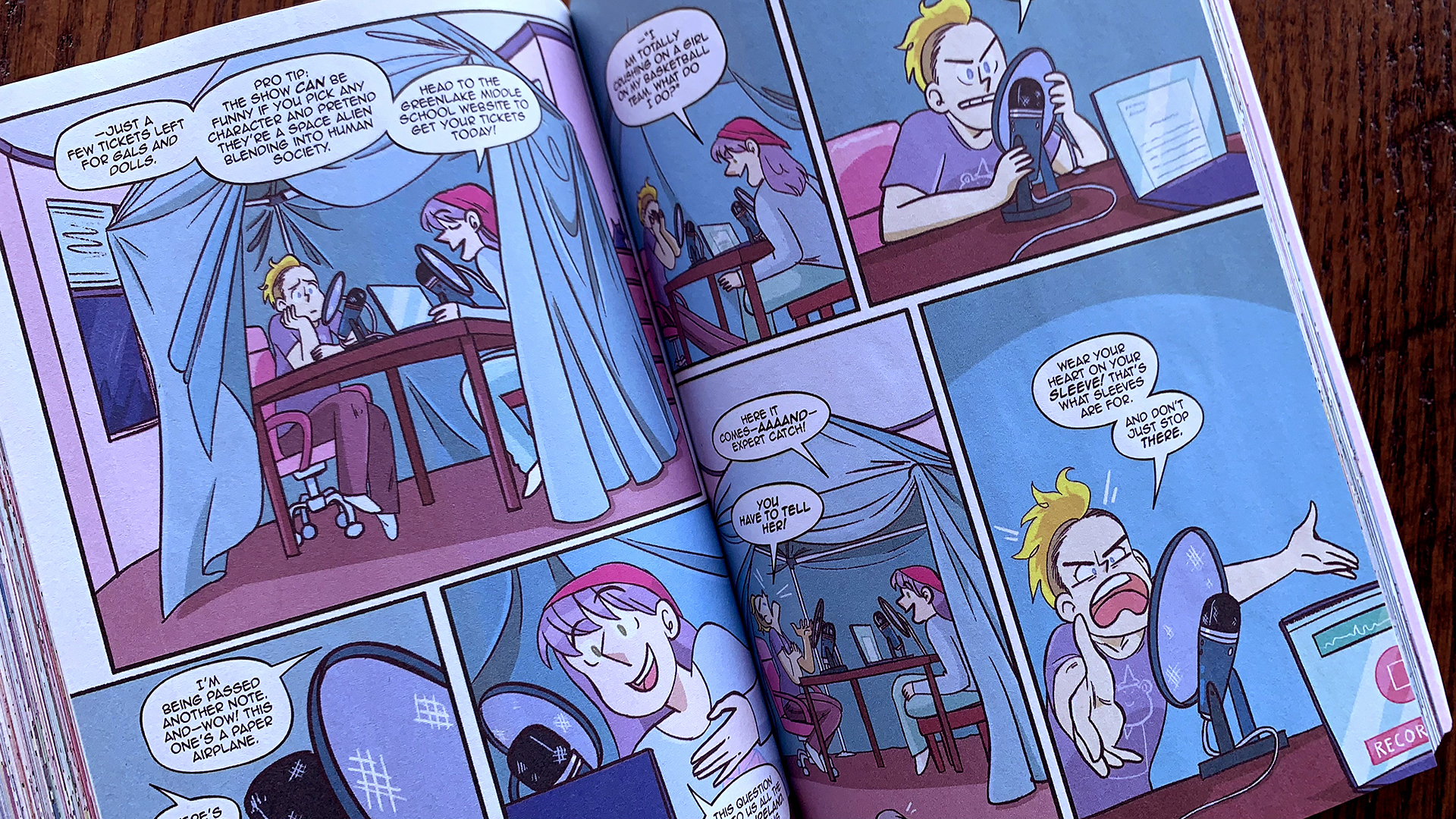
I believe that the style you choose or the cartooning that you decide to implement for a project should reflect theme and story just like any other component of what you’re doing.
So definitely picking methods of cartooning that would be able to communicate enough emotion through the characters, right?
Like, not so simple that there’s not enough range. Not so detailed that it’s distracting or too time consuming.
Finding that balance was really important. And also, since it’s just a really, like, at times, quiet, atmospheric comic, I definitely wanted to be very fluid and gestural with it.
Even, like, the hair of characters in that first book is much more, like, fluid with loops and it really moves around.
My second book has a different theme and tone.
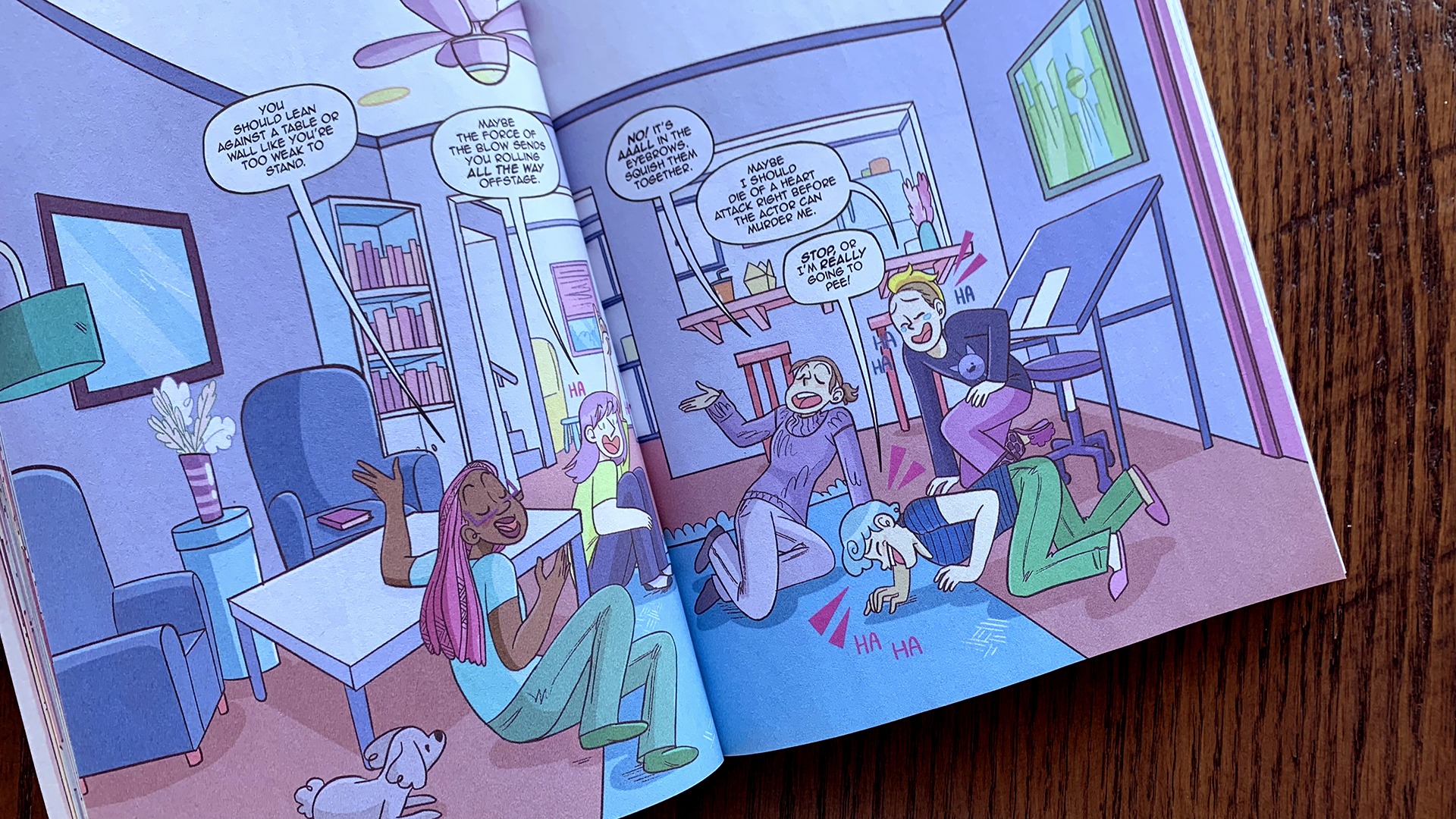
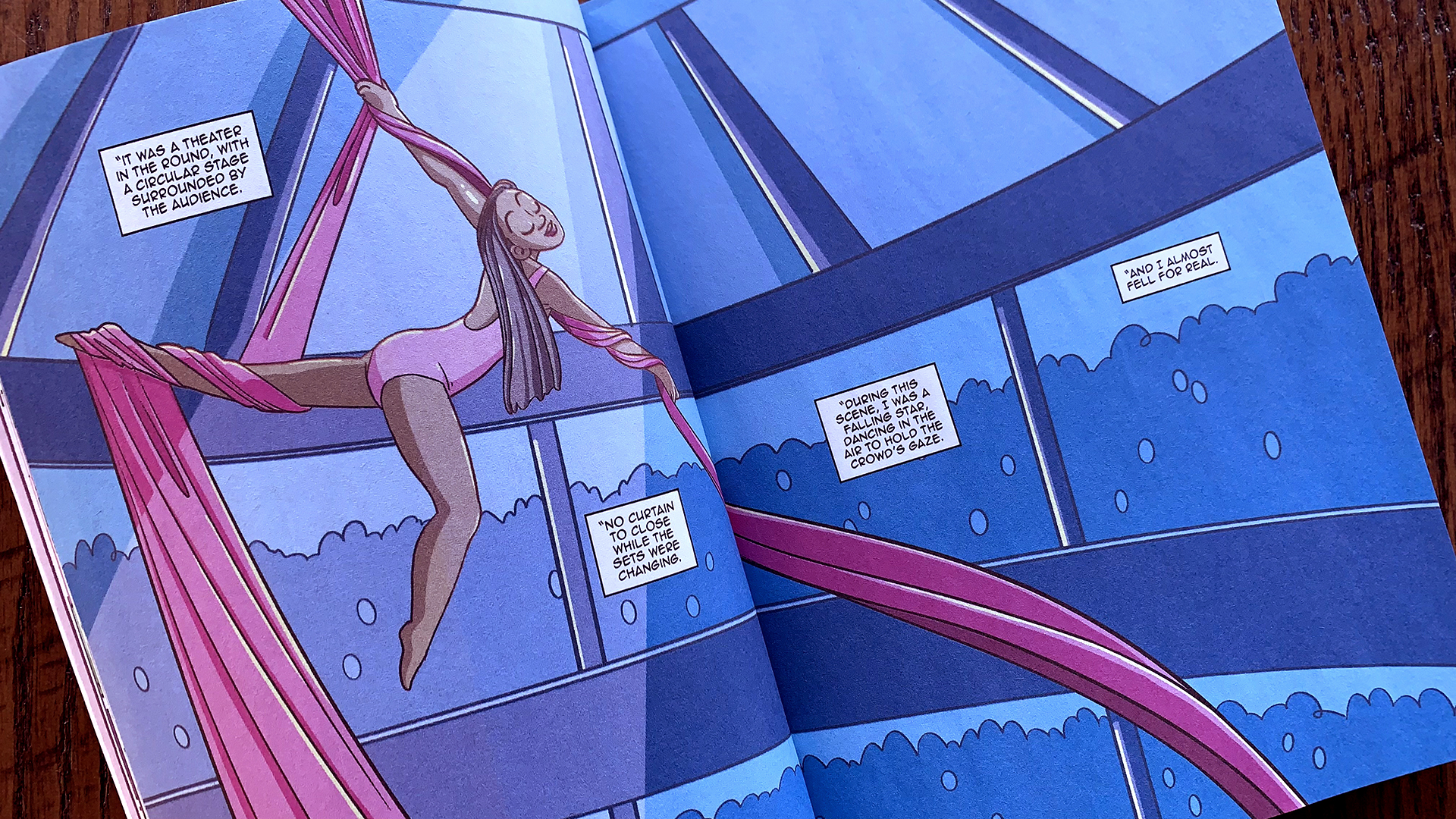
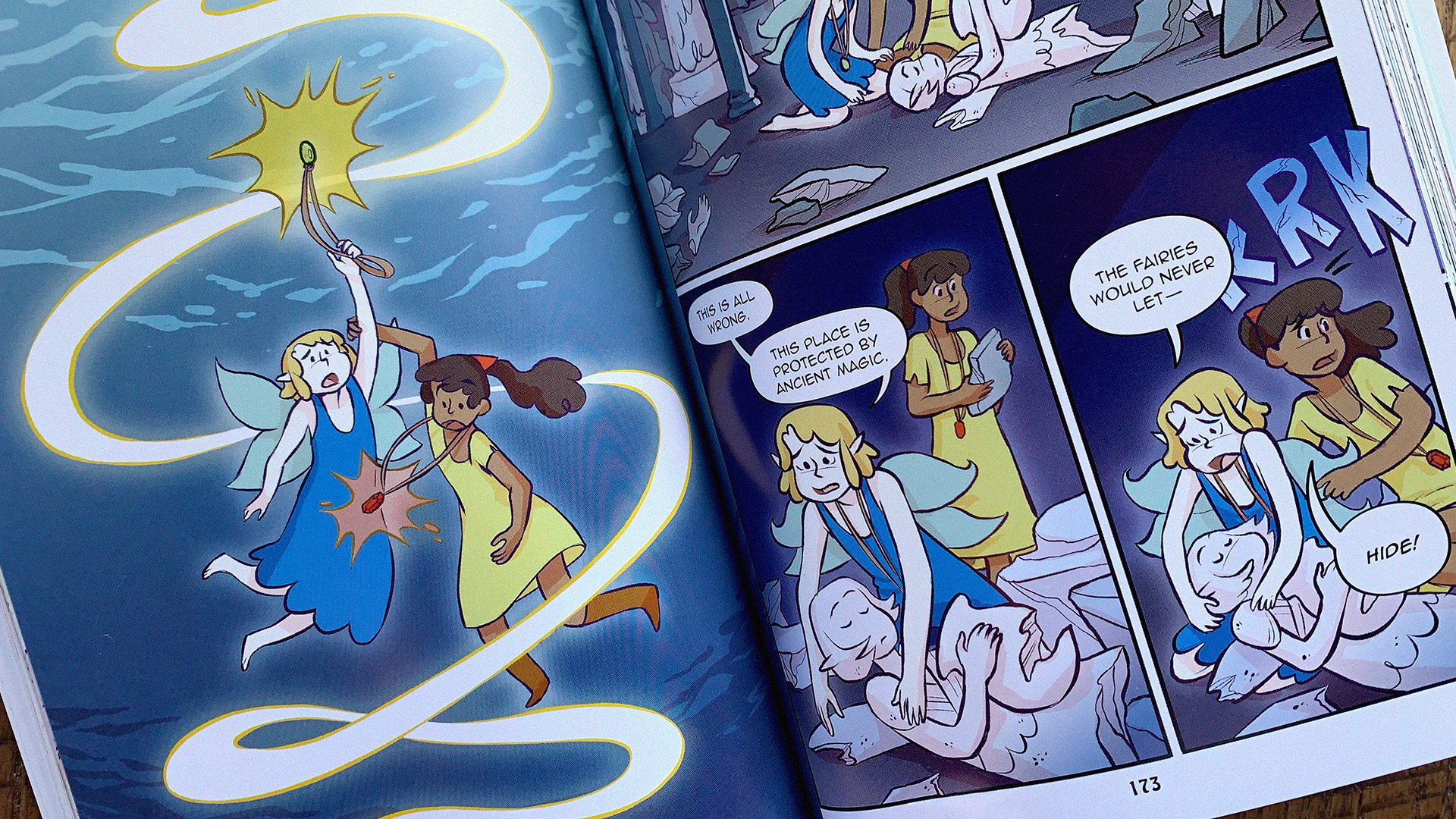
So, the ways that I’m doing it choosing to do my cartooning still fit who I am as an artist, but it’s geared toward the type of story that I’m telling in the second book with more, like, energetic characters who can do, like, broader movements and expressions because they’re all theater kids.
In art school, a lot of it was approach more than, like, specific marks that they were telling me to make on the page.
They teach you how to do all of the under-drawings a very specific way, which might not work for every person.
Discovering Synesthesia:
Tori: One thing that clicked toward the end of art school was I realized I have what’s called synesthesia.
It’s when your brain joins two senses together, so when I see things in movement, or my eyes trace a line, I hear sounds. I’m looking for what sounds right instead of what looks right.
[LAUGHTER]
…and it also meant that I can do things a lot more intuitively than other people and have different opinions about how to approach things.
Probably, the biggest variation for me compared to other students was perspective. It’s something that a lot of people really need to take methodically, like drawing the grid and all of the shapes and all of the lines but I never, ever, ever draw perspective points.
I don’t even say that as a point of pride, like, I think people often should but I think that we also need to acknowledge that, for some people, their work will be more beautiful if you don’t do that.
Imperfect Perspective:
Mari: I had a perspective teacher who was really passionate about perspective. He would draw these really complex things because it was his passion to do so.
But at the same time, at some point he was like, “Remember to draw three directions on the page.
…and for most things in comics, in particular, that’s going to be enough.”
You know, don’t obsess over the points being in the right places. Don’t spend hours on this. Draw a line going this-way-this-way-this-way in the page and it’s going to work.
…and people are going to spend five seconds on this panel and it’s going to be okay.
Chris: There are comics artists where perspective is their thing, right?
You’re really great at perspective drawing and you’re drawing Spider-man in New York City from all these dynamic angles and all that.
Well, great.
We need Spider-man comics, too.
Tori: …and I could never.
Like, I could probably figure it out, but I haven’t needed to develop those skills because I have my shortcuts.
…and I’m not passionate about it, right?
If we’re connecting that too, like, that’s beautiful work from people who really love figuring that stuff out.
Chris: It’s all difficult.
So you have to sort of “budget” your difficulty.
Dynamic perspective is just not going to fit in the emotional budget for certain creators.
…and even if it could, it’s not necessarily appropriate to the story.
…like you were talking about earlier.
The Emotional Process Of Pitching:
Mari: I found it really interesting, what you mentioned about having to go through different pitches for your first graphic novel.
What did that process feel like as you were going through it emotionally, technically?
For context, I speak as someone who is tenderly starting that process. I’m wondering how you felt and how you pushed through this process of having to create different pitches to get that start.
Tori: Oh man, it’s difficult being on submission.
It’s just a really emotionally fraught process.
…and it’s, hard because it relies on so many factors outside of our control.
One being the taste of the editors or agents who are seeing our project and also just whatever’s happening in the market right now.
Young adult “witch” projects have been really big.
For a while, that can mean that editors are looking for them, and then, suddenly, nobody can take them, because everybody’s got one on their list.
Especially with something as niche as young adult comics (which not every publishing imprint is going to do).
Sometimes that limits it even more.
I think it really helps to try to focus on what you can do.
So when I was pitching, I continued to try to work on the next thing.
I was really looking forward to starting to work on this second pitch.
There was a metaphor someone said on a previous episode of your podcast, Chris, about putting coins in a gumball machine.
Chris: Yeah, Jenn Ely.
Tori: …and I share that with everyone.
When you’re looking for a specific outcome, even if it’s a very small chance, if you want a white gumball and you putting quarters in the machine, eventually, you’re going to get a white gumball.
…and I think I really needed that perspective when I was beginning to pitch my own comics.
So, I think that just diving into the next thing is really what helps, and also understanding that in the end, I don’t need anybody’s permission to tell these stories.
It would be fantastic if it was picked up, but if I ended up not getting any bites It’s still my story and I could still make it and put it up as a webcomic or self-publish it.
Especially within comics (compared to novels), you can find an audience for your stories. We, kind of, were built on that foundation.
It’s a relatively new thing that publishers are picking up graphic novels as voraciously as they are so it’s completely an option to independently tell your stories and make your comics and put them up on the Internet.
If you want it, you’re gonna keep doing it. Like, if you are passionate about getting published, you just have to do your best to be kind to yourself, and not assume the worst from the responses that you’re getting from people and be confident in yourself.
Somehow, I kept this attitude. I just had this sense of like, “I’m ready.”
I know enough about comics that I feel like I’m ready.
I’m realizing with even the last few, I was not. I thought I was and I wasn’t.
[LAUGHTER]
…and even that kind of helped me realize I can do this if I get picked up and I will honor that chance if I get it.
Chris: Wow.
Mari: That’s amazing that you’re saying that, because I was saying that exact same thing to Chris just recently. I know I can do the work.
I just pray that someone will say “Okay, here’s a chance.”
Tori: Yeah, I think that’s a really good sign.
Chris: I would say too: both of you had a track record.
Again, concrete evidence, right?
The physical evidence that you could look back on and go, “Yeah, know I can do the work because there’s the stack of proof right there.”
Pitching Multiple Projects At The Same Time:
Mari: As a kind of follow up question, (but perhaps this is more technical) is it still acceptable, then, to be pitching several projects at the same time to different people?
…or should you be committed to one project, see that one through, and if nobody replies, then maybe start going out with others?
Tori: Just out of curiosity, are you talking about agents or editors or both?
Mari: Agents, in my case, but I’d be curious to know if that applies to anything else.
Tori: Yeah, in terms of agents (really in both cases, but especially with agents), you can be pitching as much as you want, as many projects as you want.
If you do get offers on different projects, maybe think in advance about how you want to handle that situation.
[LAUGHTER]
…but there aren’t any rules against it.
Sometimes, if you are pitching one specific project and it is not quite what agents are looking for, you might get feedback that can be really helpful.
So, I queried (for years, actually) various projects before I got my agent. Some of those were, like, fantasy novel manuscripts and other comic pitches.
…but, when I sent out this project that did land me my agent, I was only querying that project for a few months, and I would send it out to about five agents at a time, and with each round I was getting feedback. (People who liked the art and had suggestions about the story.)
Whereas, every other project I’d sent out before that, it was radio silence.
So, hopefully, If you are sending out a project where your skill level in one area or the other is very good, like it’s a great story pitch and the writing’s good or the art is really good and appealing, agents will sometimes take the time to respond very kindly to it.
Partially because we want to encourage authors, like, “We are excited about this and want people to succeed and know how brutal the industry can feel on that side of it.”
…and partially because if you give feedback to an author that you really like, they might come back to you with their next project.
…and maybe that is one that you can pick up.
Yeah, so with agents, even if you’re just staggering by like a week or two between each round that you’re sending out, um, it can be helpful.
…because once you send a project to an agent and they reject it, you can’t really send it back to them.
Sometimes they’ll allow you to resubmit it if it’s been at least six months and you’ve made significant changes to the project, but often they won’t really want to see the same things in their inbox that they’ve already responded to.
…and that part of it’s really similar with editors.
So, if you pitch to an editor and they reject it, it’s not only a “No” from them, it’s usually a “No” from their entire imprint (or in the case of a small press, from the entire house).
…which makes it so that pitching very slowly can be to your advantage, so that if you do get feedback from one editor and want to revise before sending it to a new one, you’re giving each project its best chance before that door closes on the project.
Next, In Part Two:
Tori talks about stories as “sense-making” devices, urges the importance of “celebration breaks” during long projects and shares her experience as an autistic artist.
Every Successful Art Career Is A Collaboration:
Get clear, relevant feedback on your work and personalized career guidance in our mentorship: The Clockwork Heart.
Never Miss An Episode:
Subscribe to this podcast on any of the major platforms (Apple Podcasts, Spotify, Audible, YouTube) and join our email list for notifications about future episodes, courses, and mentorship opportunities.
It’s 100% free and we will always respect your privacy.
Credits:
I’m your host, Chris Oatley, and our production coordinator is Mari Gonzalez Curia. Our music is by The Bright Sigh (which is me) and this show is made possible by The Magic Box Academy.
 The Magic Box