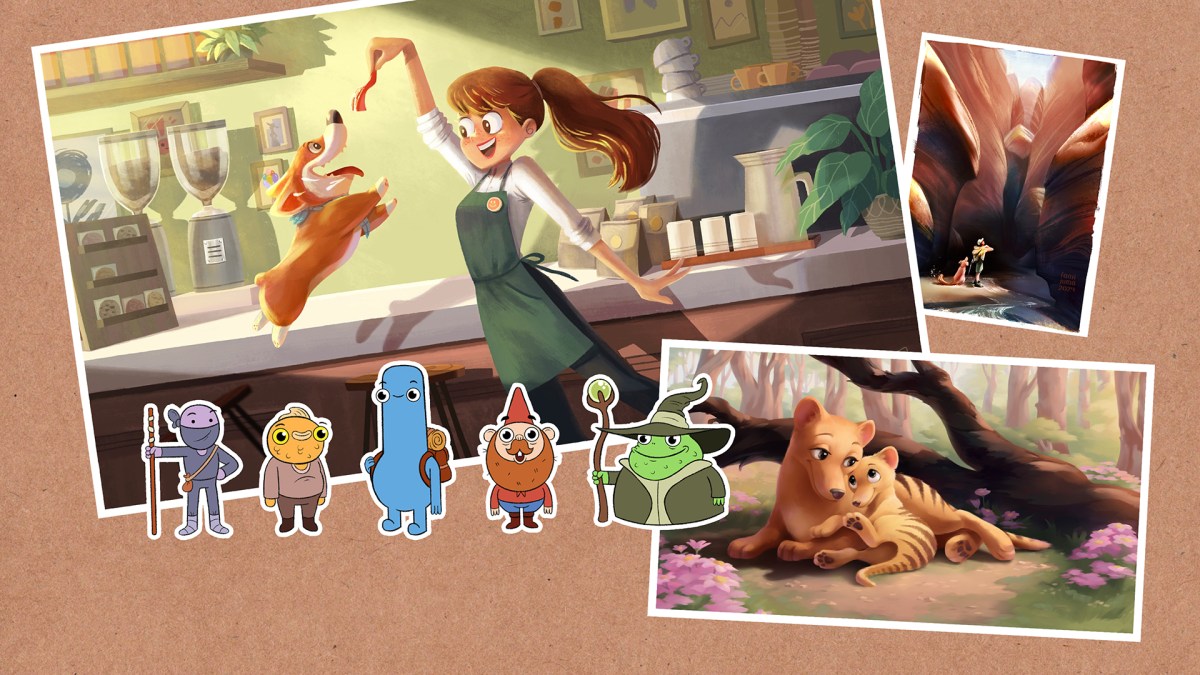
What would you do if you learned that your artwork would be featured in an industry-leading magazine for creative professionals all over the world?
…and you only had a few days to select and submit your samples, write a professional bio and a short blurb about each submission, update your website and prepare a series of social media posts to coincide with the publication date?
Would you find that inspiring?
…motivating?
…terrifying?
Nine of my students faced this question when they were named among ImagineFX Magazine’s “Rising Stars” of 2D and 3D art.
…and they’re all here to talk about this career-defining moment.
They’ll share their initial reactions and the challenges they encountered throughout the process. They open up about their struggles with self-doubt, perfectionism, and the super-tight deadline.
…and offer insights about how the experience changed them.
…probably forever.
How To Listen:
Listen to the interview via the YouTube player, subscribe to the audio podcast (Apple Podcasts, Spotify, Audible, Email)…
[UP NEXT: We’ll hear from the rest of the “Rising Stars” in the next episode.]
…Or Read The Transcript:
Today, in part one of a two part series, we’ll hear from Mutia Terian, Rami Juma, Dan Tompkins and Veronica Kosowski…
Mutia Terian:
Chris: Mutia, what was your reaction when you first learned that your work might be featured in ImagineFX magazine?
Mutia: [LAUGHTER]
That’s a very good question!
I was actually shocked.
When you called me, um, I think a few months back about this I was like, “Is it real? Really?!”
Like, I grew up with that magazine. In college I always bought every single issue of them. So it’s a big deal for me.
When all of us got featured in the “Rising Stars” issue, I was actually screaming in the middle of the mall.

…and [the shoppers’ reactions seemed like], “What happened to this girl?!”
…and I was like, “Sorry, Sorry!”
…but I was really excited.
…and then my husband was like, “Oh, congratulations! It’s really big news and I’m happy for you.”
…and I’m like, “Yeah, I’m happy for myself too, you know, and everybody else.”
Chris: It’s exciting!
Mutia Terian: Developing Confidence
Chris: Tell me the story of how you got to be so good.
[LAUGHTER]
Mutia: I don’t think I got to be so good.
[LAUGHTER]
Chris: But you did.
…but you did.
[LAUGHTER]
Mutia: I think a big chunk of it, really, is thanks to you.
…for believing in me.
…and I think you believe not only in me but also in every other person in the class. I think that plays a big role for our growth.
But yeah, for me, personally, just being surrounded by great people. I think that’s also why my painting has been better this past year. It was because of that constant inspiration around me.
Chris: I appreciate you saying those kind things.
I (and I’m sure I can speak for the other folks in the class as well) am honored at the idea of being able to have had any kind of influence in your work.
That said, your work was exceptional when you came into the class.
You know, there was already something there. There was some sort of turning point (There has to have been, right?) prior to even us meeting for the first time.
People don’t invest as much time and energy that is required to create work that is as strong as yours is, unless they have some measure of faith in their own ability, right?
If you don’t have some measure of belief in yourself, you don’t do a thing, right? That’s why I am not a basketball player, right? I have zero faith in my own ability as a basketball player. I used to love basketball.(I still like the game, but I don’t follow it.) But, uh, but I never invested in getting better at basketball because there was nothing to build on to begin with.
So when you think back, what was the turning point for you?
Where did you decide, “Okay, I’m going to invest in my art, I’m going to put time and energy into it – and a lot of time and energy into it – to really drive toward, you know, a goal – a measure of quality?”
Mutia: Okay. Wow. That question actually brings me back to my college years.
I’ve been drawing ever since I was little, but it was not until 2010 that I decided I wanted to pursue it for professional career.
So I was in art college. I graduated from Academy of Art andI had a class with one of Pixar’s art directors.
The last day of class, I came to him with my portfolio that I had so far.
…and then he looked at it and he was just, “Um, okay…”
…and then he asked me, “Okay, so Mutia, do you want to be in animation?”
…and I said, “Yes, I want to be in a studio.”
…and then he was like, “You know what, honey, uh, if you keep doing like this, I don’t think you’re going to make it into the industry.”
…and I gotta tell you, my work was not good at all back then. It was lacking a lot of things. So that was the turning point, like the major turning point for me to actually take this seriously.
…and then that’s why I met Michael Buffington and yeah, he gave me like a thousand heads to draw. So it’s like every day ten heads, ten heads….
…and then he would correct and everything.
Because of those a thousand heads, my line art became so good.
[LAUGHTER]
My line quality sucked back then.
…but then because of that, because Mike was like, “I want you to just focus on line art and how to draw with confidence,” that was the turning point for me.
…and then after that, he gave me, like, more assignments.
…like draw 500 feet, 500 hands…
It looked and felt mundane at that time but now I’m like, “Thank you so much because of that, it’s not just changing my skill, but also my mindset.”
Chris: Yeah, totally.
Mutia Terian: Defining Confidence
Chris: Something I talk about with students sometimes is how you can make what people would describe as a “confident” painting or a “confident” drawing, but that doesn’t necessarily mean you felt the emotion of confidence while you were making it. Right?
The confidence is crafted. The confidence that people can see, that they can detect in a drawing or painting is actually crafted.
For you, do you think it was the repetition? Do you think it was just having to power through that kind of workload? Was it some other epiphany that you had along the way? Obviously, it was connected to this “thousand heads” assignment, but what was going on in your mind or your, you know, emotions or whatever during the transformation
Mutia: Yeah, one of the things is repetition. For sure, because the more we do things, the more we get familiar with it and then the better we are at it.
But, I think the major key, for me, was because, somehow, I know that one day I’m gonna make it anyway. I know it maybe sounds like, “Oh, she’s delulu,” maybe…
…but, for me, I always have that kind of belief or faith that one day I’m going to make it anyway. I think that was the charge for me.
Even though, like you said, a lot of the time I’m not confident about what I do, but that kind of like, give me a perspective. Yeah, that belief gives me a perspective to like, “Okay, maybe it’s not that good, but the next piece, let’s make it better.”
That kind of, yeah, that kind of cultivates my confidence in approaching this.
Chris: So then, am I correct in in understanding that your confidence was growing throughout the thousand heads project…?
(…and part of that was already there. You brought part of that with you. That’s the belief that you’re talking about – that you just, sort of, belong here.)
…but then that grew because of the intensity of the assignment.
It’s almost like the recipe was there and this thousand heads project was the time in the oven for it to actually bake.
…and it needed to stay in a certain amount of time.
Mutia: Yeah, and especially when I see my growth, that boosted my confidence, you know, it’s like, “Oh, okay. Three months difference?”
…but it was so different.
…the art that I was making.
Chris: Yeah, and so then you get these wins along the way and then that gives you another energy boost and then you can build on that.
Yeah, that makes a lot of sense.
Mutia Terian: What To Do When You’re Stuck
Chris: What’s your advice to a younger artist – they have gone through some sort of regimen or routine, or they’ve attempted some sort of ambitious project like you’re describing…
…but then they end up in that “skipping record” kind of mode…
…they feel like they just keep going in circles or going in loops instead of feeling like they’re actually moving forward as you’re describing?
Mutia: I think having a mentor helps a lot.
Chris: Yeah.
Mutia: So if they don’t have a mentor yet, I advise, “Please find one because that is an investment, a great investment in your artistic career.”
Approach someone that you admire and ask them if they can be your mentor.
…or if we have like a budget, get a class.
…like this Clockwork Heart mentorship in Magic Box.
…and also, if someone doesn’t really have the budget for a class or mentorship, take a free one like the Women In Animation mentorship and, yeah, I think the people inside that will be happy to help you grow as an artist.
Mutia’s Magic Feather:
Chris: Okay, last question.
…and this is the question I ask every guest who joins us on the podcast (Sometimes I’ve forgotten. There’s a couple I’ve forgotten, but usually I remember.) and that is the question of the “magic feather.”
Dumbo had a magic feather and he thought he needed it to fly. Then he realizes, “Oh, the feather is not magic. I don’t need it to fly.”
What is something that you thought you needed, but you actually ended up not needing anymore in order to fly?
Mutia: Maybe, for me, it’s people’s approval.
It’s like, if people approve of what I do, I must be doing something good, but then I realized I can create any kind of good pieces without people’s approval.
…and I think, um, that shows in my Instagram. I mean, I don’t really…
[LAUGHTER]
I don’t really post in my Instagram. I post my daily life in my stories, but that doesn’t really have anything to do with the art.
…but, yeah, I used to think too much when I wanted to post something.
…but now it’s like, “You know what? I’m making this. I’m just going to post it, whether or not people will like that piece.”
Chris: …and so letting go of the need for other people’s approval has affected your decisions about how you self promote.
Has it affected the actual art at all? Your drawing style or your color choices or subject matter or anything like that?
Mutia: Yeah, I think so.
It kind of gives me freedom to explore any style that I want.
I didn’t really have this freedom before because I thought, “Oh, I had to do like the Disney style to get approval,” you know?
…to get people to follow me, to get people to like my work.
But then now it’s like, “What Disney? I don’t really do Disney anymore.”
[LAUGHTER]
…and then my style kind of grows into different cartoony styles and I’m actually happy about it.
So, you know, not having to prove anything or to get any people’s approval…
Yeah, that frees me in terms of the artistic choices that I have.
…and, I think, maybe the career path.
Chris: I would describe and have described your portfolio as “surprising.”
…and what I mean by that is it’s familiar enough to know what you’re trying to do professionally.
Like it’s clear what industry you want to work in. Your sense of humor, your aesthetic preferences these these kind of things are very clear in your portfolio but there’s just a very unique and personal kind of “take” on the way you caricature the world that is very surprising.
There’s, um, a surprise and delight in the work in a way.
…and I hadn’t thought of that, previously, as being connected to confidence.
…but now that we’re talking about this, it seems like it is. It seems like your confidence began as this intangible, uh, “faith,” as we talked about, just a belief in yourself and then, through your drawing practice, literally took shape and became more specific.
Mutia: Yeah.
Chris: …and then eventually led to a point where you kind of said, “This is the voice I speak with,” right?
“This is my voice artistically.”
That seems to be where, perhaps, the surprise comes from because it’s so personal and specific.
It’s easy to see work that is as mature and sophisticated as your work is…
…or, you know, you think of the people that you admire, right?
It’s easy to see that kind of work and just feel like it’s forever away.
You know, “I’m never gonna get there. I’m never gonna do work that is surprising or delightful,” or whatever. Whatever the story content is, it’s easy to just feel like it’s just too far away.
But you grow into it. It’s a combination of following the path of other people that are trying to help you and that are invested in you and, and have your best interests in mind.
…but then also a bit of creating your own path.
…and I think that’s sometimes why it takes a while.
…because it’s hard to kind of blend those things together.
…but you’ll get there.
It’s not far away In that you can’t reach it, or that it’s lost – like you’ll never find it because you don’t know the pathway there. You will find the pathway there but you gotta make the drawings.
…and seek out a mentor and these various things to, to be able to make that progress, but you will.
Mutia: Yeah. I think our journey is not a straight line. I feel like to get to certain point, I had to do a detour.
I can’t really see like a year or two from now, but what I can do is to, like you said, like do one step at a time.
Maybe we gotta do a detour first before arriving to that destination.
…and that’s okay.
Rami Juma: Digital Painter
Chris: Rami, how did you react when you first heard that your work might be featured in ImagineFX magazine?
Rami: The real surprise came when it actually happened (when I saw the picture in the folder that you sent us – the PDF) and I just couldn’t believe it, like, “Holy cow!”
Holy cow, I mean, this was amazing, yeah…
I’m still processing it, you know?
I still want to see it within my hands and see how it feels.
Rami Juma: The Benefits Of Writing About Your Art
Chris: What was, for you, the biggest challenge throughout this project of doing this article and getting your work together, updating your website, all the things that, you know, we’ve all done in response to knowing it was going to come out?
What has been the biggest challenge or obstacle that you’ve encountered?

Rami: I guess it was writing the blurbs because this actually forced me to pull out my thoughts of each and every piece that I submitted and really write what it’s about and the context of it.
Chris: For the listeners that was requested by ImagineFX. They asked the artists to choose a handful of pieces and then write a blurb about each one.
…so they had options (presumably) at the magazine.
…and so, Rami, you were saying that this was really valuable for you to have to intellectualize those, I assume, more intuitive choices that you made.
Why is that valuable?
What, what’s happening there?
Those two different modes…
…the mode of feeling it and responding and interacting with the subject matter and then switching modes into this way of trying to explain it?
Rami: It is valuable because it really puts in perspective what you’re doing. It really makes you think why you’re making the choices that you’re making or what was going on in your head or what you felt during that painting process.
…which doesn’t usually happen. We don’t go back and really think about these things but this really, forces us to think about why and it brings a little bit of clarity.
…first of all, into the work, and second of all, into myself. I kind of understand myself even better because of that.
For example, the painting that was featured, it was a study that I took further.
I know how it felt in that place. It was this hiking destination. It’s a canyon where you can walk between the rocks and there’s water below you and it’s a really nice experience.
…but I really wanted to write why I chose to take this study further and it’s because I wanted to just express the beauty of the place and how it actually felt. I was really in awe of the colors and the shapes and the sun hitting, you know, the dramatic angles at every corner. It really put some things into context that I may otherwise have not, uh, thought of so thoroughly.
Rami Juma: Effort Vs. Effect
Chris: If I’m not mistaken, this piece that they actually chose was one that you were on the fence about whether to include.
Rami: True, because it took a few tries until I could get the values of it right the whole concept of it right.
…because it was a rough study and I didn’t really mean for it to be that finished.
…but because I’ve worked and reworked it so many times and I took your opinion on that. The focal point was wrong and I should really try to think about where the, um, the whole visual flow is going
Chris: Yeah.
Rami: Yeah. So I took it further and I was really surprised that they went with that because the other pieces that I submitted were actually more detailed, let’s say. More work and more hours were put into them, whereas this one stayed a little bit on the loose side.
…but as the whole concept, it really looks visually appealing.
I mean, I like it.
Chris: Yeah, it’s a beautiful. piece.
Yeah. Amy Lewis talked about that on this podcast, just a few episodes back, where she talked about how frustrating that can be, though, sometimes where you put all this effort, all this blood, sweat and tears into this painting, and then it gets a subtle response.
…and then you have a study that you did in an afternoon, and everybody goes wild for it. It’s like, “Oh! Well, I mean, I’m glad. I’m glad you like that, but what am I not seeing?” like, “What is it about this, you know, spontaneous piece that took less time and effort that got bigger response?”
Rami: Sometimes these spontaneous things show more character, show more of your, let’s say, “inner self” – your, your true interests.
…because it’s kind of unexpected.
…because it’s kind of nonchalant.
It comes naturally to you.
Chris: Yeah.
I think it’s easy for us to get in our own way as painters.
…and the longer we spend on a piece the more opportunity there is for that to happen.
That doesn’t mean every piece should be fast.
…and we don’t want to use that to be impatient with our own work.
Something else that’s noteworthy here is how you’ve said you actually worked over this piece several times so it looks spontaneous, and it was born spontaneously, but at the end of the day, it’s not as spontaneous as it started out.
The trick there was just trying to still make it look spontaneous.
Rami: Oh, yeah, that is absolutely correct.
…but still, the effort that I put in afterwards, after the discussions were very focused, right? So they were put in the right place.
…but the other parts of the painting, some of them were left almost the same as when I started it.
So it does have these rough edges. They’re still there. It’s just that with the feedback, I really focused on where to put the extra work.
Chris: That’s very cool.
Rami: Yeah.
…and I think that’s why it resonated with whoever chose this piece.
[POUNCING NOISE IN THE BACKGROUND]
I’m sorry, my cat is doing zoomies around the…
[LAUGHTER]
Rami: …room.
Chris: That’s great. We have an additional guest.
[LAUGHTER]
Rami: So if she jumps on to me right now, I’m sorry about that.
Chris: No, it’s great. I love it.
Um, how does that inform future work for you after you discover those things? You know, what do you do with that information?
…that “insight,” maybe, is a better word.
Rami: I guess it makes me choose, um, maybe better ideas and concepts that more closely align with my interests.
…and maybe then the whole process of it becomes more, you know, intuitive, more enjoyable because…
…because there have been a few pieces in the past that I’ve worked on and I didn’t really fully enjoy them, you know? Some of them felt like they were a chore.
So maybe this would better inform my choices of what to do next.
…like what subject matter to choose.
…maybe what other photos or references or concepts to further develop.
Rami Juma: When To Change Things Up
Chris: So what’s your advice, Rami, to somebody who feels like the tools are thwarting them?
Rami: Yeah. That’s a great question. I would say maybe try something else.
If one has to paint digitally, maybe try a different brush. Maybe try a different program. Maybe try a different aspect ratio. Maybe change the physical location. Maybe you’re just feeling stuck because the room atmosphere isn’t really that inspiring to you. Maybe try to go outside, in a cafe or just, just try to shake things up.
…and that usually worked for me. Like there have been a few times where I didn’t feel like the place where I’m painting was the best. Maybe I’m just feeling a little bit bored or a little bit lonely or something was missing and, usually, that gets the wheels rolling again.
…as long as I try to do anything different.
Do you feel the need to go paint elsewhere?
Chris: All the time.
As soon as I start to feel like I’m fighting the tool, I change it up.
Changing locations is very common. I do that all the time.
Switching to traditional…
Like with composition, for example. If I feel like i’m repeating myself too much, well, then I go and I switch mediums. I don’t work out the composition digitally. I switch to charcoal.
…or I do studies, pencil studies, just observational drawings of my reference and then I take those and I scan them in and I just…
Almost like a collage, I’ll just take my own studies and resize them and rotate them and skew them. So, essentially, I’m using the transform tool or the warp tool or something like that.
I paint with the gradient tool instead or I’ll literally go use the lasso and cut off a piece of my own drawing and then reposition that because I’m just trying to get away from the physical mode that I was in before.
…the physical mode that was frustrating me. I’m just trying to do anything except that.
…and then usually that gets me unstuck.
…pretty much every time.
Sometimes I have to try several things but, uh, yeah…
Yeah, I change things up all the time.
Rami Juma: Gifts From Your Younger Self
Rami: You know, if it’s a personal piece and there’s no deadline on it, if I feel like I’m stuck, I just put it aside. I put it aside and I know it’s unfinished for now, but (and this happened so many times) I go back to it months later, or sometimes years later. I go back, “Oh my god!”
…and I come back to it with such fresh eyes…
Chris: Yeah.
Rami: because during that time, I (usually) had, you know, gained a lot more knowledge, insights…
…because I’m always taking classes.
…either with you, Chris, or with something else, but I love going back to my old work.
Chris: Me too.
Rami: …and reworking.
I just save that old version and then, “Okay, let’s see how I improved. Let’s see how my mindset changed.”
Chris: Yeah.
Rami: And usually, usually, yeah, good things happen.
[LAUGHTER]
Chris: Yeah, I was literally just journaling about that this week.
…about how I have my folder of unfinished projects.
…and I used to feel embarrassed by that.
I used to feel, you know, some shame.
…and every time I would go open that folder (and usually just by accident, because I usually just avoided it)…
I’m looking for a file or something, and then I kind of stumble across this folder, and I’m like, “Oh…”
…you know?
“Here’s the unorganized closet of my unfinished projects.”
…and then, I don’t know, I think getting older has been part of it. You know, I’m well into my middle age now, and I think that’s part of it. I’m just like, “Oh,” like, “Who cares? Finished. Unfinished. It doesn’t matter. Is there anything in there you like? Well, just go work on it now.”
Rami: Yeah.
Chris: …and it’s almost like a gift from my younger self.
You know?
“Here, I set this up for you. Now you can go and take it further.”
…and like you’re saying, “Now that you have more confidence in your skill set and in your willingness to take risks, etc. etc, go for it.”
Yeah, that’s been actually a complete 180.
That has gone from being a thing of shame to a thing of celebration.
Rami: Yeah.
Chris: Yeah.
Rami: Yeah absolutely.
Rami Juma: How Mindset Affects Art
Rami: I did want to say, um, to the topic of feeling stuck on artwork is that I don’t know if you can agree, but most of it (or some of it) can be psychological.
Like, if I’m actually feeling my best inside and you know my energy is good and my life situation is good and everything is flowing like, like I’m feeling my best, usually the work reflects that.
Do you, agree?
Chris: Yeah, totally.
I don’t think I ever, in my entire life, gave enough credit to having fun while I’m making art and…
Rami: Wow.
Chris: I mean, as a professional, it’s not always going to be fun. That’s being a professional, right? You show up even when it’s not fun and you still hit your deadlines and that’s what people pay you for.
Sometimes you just have a bad day. Sometimes it’s just a bad drawing day or whatever, you know, that that happens. That’s just being human.
…but there are ways to bring fun into it more intentionally and, for example, one thing for me has been indulging my geekiness with fan art pieces.
…and I’ve always done fan art from time to time. I’ve never felt like that was less serious or something. I think some people do think that but I never really gave enough credit to how taking time to work on a Ninja Turtle piece or a Xenomorph piece, or, you know, something like that…
Right now I’m working on a Fraggle Rock piece.
I never gave enough credit to how much that fuels all the other stuff.
I’ve been working on some voiceovers for some plein air pieces lately that I’ll post to the YouTube channel and I can even hear it in my own voice how much more enthusiastic I am about all of the work because I’m tapping into that fun aspect more often on purpose.
Does that make sense?
Rami: Yeah, absolutely.
Absolutely. Yeah, I completely agree.
Rami’s Magic Feather:
Chris: Last question, Rami.
You’ve heard me ask other guests this. question, and I have to ask every guest.
Dumbo had his magic feather, and then he learns that, actually, it’s not magic. What’s something you thought you needed to fly and actually you had it all along?
Rami: You know, I heard that question a few times on the podcast, but I never thought what answer I would give. What other answers did you get? I’m kind of curious.
[LAUGHTER]
Chris: Let’s see.
Two people talked about external validation. Lizzy talked about animation specifically…
Rami: Um, I do have to admit that this was also one kind of a motivation for me.
…and maybe some of it is still there. It’s just that now I’ve reached a point is that I’m going to always do my best and whatever happens, happens. I’ll just keep going. I know I have this passion.
…and not to sound stuck up, but I do like my work. I do. I’m very thankful for all the skills that I’ve learned and I’m really proud of the level that I’ve reached.
Of course, I can see a lot of room for improvement.
Chris: Oh sure.
Rami: …and so I’m really proud of the progress that I’ve made throughout all of these years.
Chris: Yeah.
Rami: …and I hope this never stops.
I never want to stop learning.
I feel like as long as I’m willing to learn and grow, there will always be, you know, room for improvement, room for new, exciting things to happen, opportunities to get connected with new people and so I never want to lose that.
I always want to keep exploring how deep and how far I can go and I can take my work.
…not just because of my own work, but also to inspire other people and to connect with other people. And I really hope that, on some level, that my work resonates with people.
You know, I just kind of feel like this is actually an opportunity to make some kind of good change in this world and I really hope that my work plays a part in that.
Something that you said years ago, and I really, you know, it’s still stuck in my head is that art is the conscience…
Chris: The culture’s conscience.
Rami: Yeah.
…and I found that to be so deep. I’ve never thought about it this way but I found it to be so beautiful and really, really resonated with me at that time and it still does.
Dan Tompkins: Character Designer
Chris: Dan, what was your reaction when you first learned that your work might be featured in ImagineFX magazine?
Dan: I think I was shaking. I was so excited. It just feels like something I’ve been trying to get noticed for, for so long.
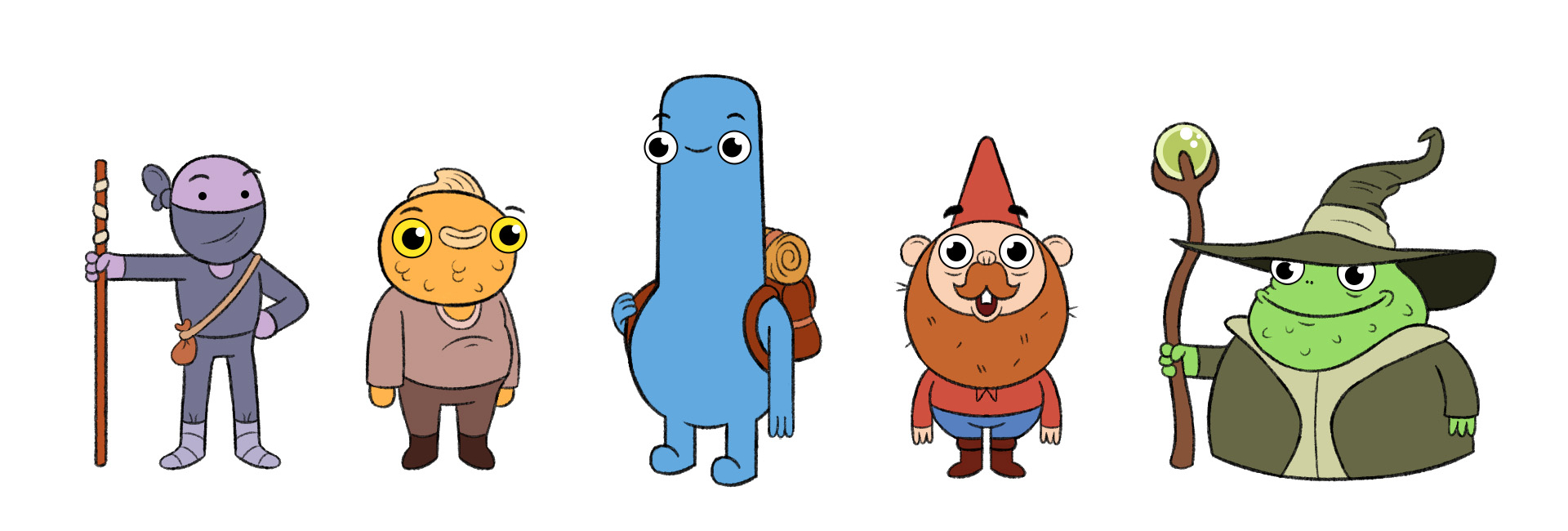
…and then here’s a moment where my work’s going to be featured and seen by a lot of people.
…and kind of this, uh, come-to-fruition moment. All this hard work is finally starting to pay off and I’m getting recognized for it.
Chris: Yeah, that’s awesome.
Dan Tompkins: Improving Old Art
Chris: While working on this project, the ImagineFX article, whether that’s your bio or the curation of the work or the improvement of the work or developing your website in anticipation of more visitors.
…any aspect of that, what do you feel like was the biggest challenge or obstacle that you had to work around or through or overcome?
Dan: The thing that, I guess, irked me the most was seeing my old work.
…knowing where I am now and trying to, kind of, bridge those gaps.
…because I was thinking, “I’m not gonna be able to create a lot of new work in the timeframe before the magazine comes out.”
So I was thinking to myself, “Okay, strategically, I think it’s best if I just take my old work and try to bring it to my current skill level.”
That was challenging. It was kind of just like looking at myself in the mirror and acknowledging, like, “Okay, this is where you were at the time, but this is where you are at now. And, you know, it has gotten better. Don’t beat yourself up that you weren’t better at that time. Just try to do the best you can now.”
Chris: …and help us understand some more of the specifics of that process. What is “better?”
What did you literally do to, as you say, bring the older work up to your current professional standards?
Dan: There was one lineup of characters I had specifically. It was the cast of Succession in the style of Adventure Time.
Chris: Uh huh.
[LAUGHTER]
Dan: I’m looking at the new ones right now, and I’m just like, “They’re so much better than they were.”
I took the old designs, put them in Photoshop, made the layer barely visible…
…and then I was drawing over them, kind of noticing the things that stood out to me the most like, “Oh, that pose is a little too stiff,” and like, “The hair just doesn’t look structured enough. It’s like a little bit stickered on.”
…just trying to notice these little inconsistencies like, “Does the ankle touch one of the sides of the pant leg or is it centered in the pant leg?”
This needs to look like it belongs in a show.
Chris: Yeah.
Dan Tompkins: Saved By “Game Face”
Chris: What you’re describing could be very frustrating, overwhelming, and even defeating for somebody trying to accomplish the same thing. Can you speak to that a little bit?
Dan: Yeah. Oh yeah. I remember, um, I was pulling some pretty late nights that week…
Chris: Yeah.
Dan: …trying to get everything in.
I think the hardest part is still reconciling what I want them to look like and what my current skill level is plus the deadline.
Chris: Yeah.
Dan: Cause there’s a deadline. Gotta meet the deadline. Yeah, that, that was incredibly challenging.
Chris: It seemed like you just were like, “Okay, game face.”
You know?
Dan: Yeah, exactly.
Chris: Just, “I’ve gotta do what I’ve gotta do here.”
Dan: Right.
…and I think that…
That’s what saves me. It’s like, “Oh, this is what has to get done. You just have to do it. However can get there is how you get there.”
Dan Tompkins: Drawing Yourself Out Of Doubt
Chris: What do you do when the emotions come?
Do you kind of park them? Do you acknowledge them and just work through it with them there also? Like, how do you…
[LAUGHTER]
How do you navigate that level of intensity in your work while also being an emotional being?
Dan: I think a lot of the times I’ll let myself stew in the emotions and then I just kind of draw myself out of it…
Chris: Okay.
Dan: …if that makes any sense.
Chris: So you don’t run from it or try to avoid it.
Dan: No. I just kind of let myself be there but while I’m doing that, the pencil is still touching the paper.
Chris: Yeah.
[LAUGHTER]
Dan: …and I’ve always been able to draw myself out of it.
Chris: Yeah.
Dan: …quite literally.
…and I’ve been there enough to know I can always get out of that.
Chris: Yeah.
Dan: I think, earlier on, it was a little bit harder to fight through those emotions, but now it’s a feeling that’s so familiar. It’s like, “Oh, I’m having one of my regular crises that I’m not good enough but I know I can work through …and it’s always a matter of “let yourself feel it.”
…but then it’s…
You got to get back to work.
And then you’ll…
The confidence comes back.
Dan Tompkins: Desensitizing Yourself To Doubt
Chris: Yeah, something very interesting about what you’re saying there…
…and I’m no psychotherapist. I can’t, you know, [LAUGHTER] I can’t speak clinically or medically about any of those things.
…but something it seems like I’m hearing in there is, You can’t have one without the other.”
If you had never just been willing to “stew” in the emotions and just let them come and just feel it and understand what it feels like and become familiar with what it feels like…
…then you would never become familiar with what it feels like and therefore it would be strange every single time as opposed to, “I know what this is and I know it’s gonna pass.”
Dan: Yeah, exactly.
It’s a blessing and a curse.
…but I’ve learned how to tame it rather let it destroy me.
Chris: You just become so used to it that it’s just part of the process now.
…and your response starts to become more just about, like…
It’s less phantasmagorical [LAUGHTER] and it’s more just, “Okay, the emotional response I’m feeling is that there’s a gap here. There’s a gap between the work that’s on the page or on the screen and the work I’m trying to make. So let’s just solve the problem. Let’s just analyze and figure it out.”
Dan: I’ve tried to adopt that into my process. Looking at professional character designers and just asking, “Why does theirs look better?” like, “What… What’s going on there?”
I just try to figure it out more scientifically, I guess, than emotionally.
Chris: Yeah, as much as possible anyway.
What would be your advice to somebody who feels like they’re overwhelmed by their emotions in that process though?
…that they feel like they don’t know how to find that way to the analytical?
Dan: The first thing that comes to mind is just, um, “Don’t let yourself stop working.”
Chris: Hmm.
You’re talking about “stop working,” like, existentially.
Dan: Yeah.
Chris: It’s okay to take a break…
Like, go to bed.
This is the thing I…
[LAUGHTER]
A lot of times I’m like, “It sounds like you just need a nap.”
You know, [LAUGHTER] like, “Maybe just, uhhh, some sleep might make a difference.”
…but yeah, what you’re talking about is at a fundamental level.
Don’t let it stop you as in, “I’m throwing out my art supplies.”
Dan: Exactly.
…and yeah, I think, just stressing the importance of “No 0% days.”
As long as you made something that day, I think that really helps you get through those, those dark times.
…and just stressing, “It doesn’t matter what this looks like. No one has to see it, but as long as I put something on the page today, the wheels keep turning.”
Dan’s Magic Feather:
Chris: As you know, Dan, I ask every guest the same question. The question of the “magic feather.”
At this point in your career, what do you feel like is your magic feather thus far?
Dan: I always thought I had to do all these studies to get good enough at drawing people to do character design. I can’t point to exactly when this happened, but, eventually I was just like, “Oh no, you design characters and you get better at it…”
Chris: Right.
Dan: “…and they just get better and better and better.”
Chris: The fundamentals are an ongoing conversation with your portfolio work.
Dan: Yeah. I had it in my mind where…
I thought I had to get to a certain point and then I could “unlock” character design.
Chris: Yeah. [LAUGHTER] Yeah.
Dan: But like you said, it’s an ongoing conversation. I can design characters (and they’ll get better with time) but I can also work on the fundamentals at the same time.
…and they’re not mutually exclusive things.
If that makes sense.
Chris: Yeah.
Look while you leap.
Veronica Kosowski: Animation Background Painter/ VisDev Artist
Chris: Veronica, what was your reaction to learning that you might be featured in ImagineFX magazine?
Veronica: Oh, man. Extreme and utter happiness and disbelief and joy because it’s a big deal.

Chris: What do you feel like was the biggest challenge or obstacle that you encountered?
Veronica: Well, I think for me, a big one, as always, was time.
Since I had no idea it was coming, I felt a little bit underprepared.
So it was a matter of making use of what I had in a timely fashion and not being perfectionist about what I’m going to be submitting. This dichotomy of trying to do the best I can, but not guilting myself or beating myself up about the things that I might perceive as shortcomings…
…and so there was a little bit of that coming-to-peace with the fact that you can’t create a bunch of new work in a very short period of time.
Veronica Kosowski: Learning From Your Younger Self
Chris: Mm hmm.
What’s it like curating your own work? I mean, that’s essentially what you’re doing, right? You’re curating a gallery show of your own work, except it’s a gallery that’s going to be submitted to a publisher instead of hung on the walls of an art gallery.
Veronica: Yeah, it was very interesting curating my own work because I think with these pieces, it was a nice opportunity to see the strengths that were in them. It’s very cool to see that it’s something that you can still take pride in. You’re like, “Wow, that’s me! I painted that.”
Chris: Yeah, and I think we’ve talked about this before.
…about how I don’t really cringe at my old work.
I know some artists do. I look back and I just see a kid trying really hard.
…and the older I get, the more I feel like I have things to learn from him. I feel like he has things to teach me. And a lot of that has to do with enthusiasm and the importance of holding on to that.
Sometimes we try to build a career out of enthusiasm and I don’t think that’s super sustainable, but it’s easy to get a little bit old and grumpy. (I don’t feel like I’m at risk of becoming an old and grumpy man, but that can creep in over time.) I guess it’s a challenge to myself to be a, you know, to continue to be a whole person through my art.
Veronica: Oh yeah. I relate to that so much, Chris, because I never look back at my old work and think, “Oh god, I hate it.” I don’t have that in me. I see, like you said, younger Veronica with her nerdy love of animals and her nerdy love of fantasy.
…and I think, you know, “If nerdy little Veronica of childhood could see what I’m making now, it would be like, ‘Wow.'”
Looking back at those pieces, I can see things that have resonated with me and that are important to me since even back in childhood.
…like in the case of my thylacine pieces where I care so much about animals and conservation and extinction issues.
…and that’s something that’s been with me my whole life.
It’s so cool looking at these paintings because you see that younger artist, but then you also see the skill of current-me artist. So I think that’s why I never struggle looking at older pieces, because I see where I was and what I was thinking when I made it but I also see where I can take it from here and I think that’s a really cool jumping-off point.
Chris: That’s really good.
Do you ever struggle with that?
Veronica: The closer I am to the creation of the piece, I struggle a little bit more to see the good in it. So, sometimes I’m in the thick of things and the piece isn’t finished yet, it’s very easy to take that stuff and blow it out of proportion.
…but I feel like that kind of dissipates rather quickly for me.
Veronica Kosowski: The Benefits Of Life-Long Projects
Veronica: Just because something is “final” (as a final piece) does not mean that’s the be-all-end-all of that idea, even. I think working on long-term projects helps with that too. Not everything in the world revolves around that piece. It’s in a larger world. If you want to revisit it later, cool. If you want to just leave it as an artifact, then you can do that too.
Chris: This is why I return to the same worlds over and over and over again.
You know, I go back to Animal Farm or Midsummer Night’s Dream or Wizard of Oz. I just keep going back to those things because, sure, I do different illustrations based on those stories, but returning to that world, I’m building on creative decisions that I made previously. Even if it’s a totally different illustration, totally different scene, maybe even different characters, there’s still investment that I’m benefiting from that I made before when doing other pieces.
If it ain’t broke…
Veronica: Yeah , exactly.
You are still the artist you were back then, but you’re also the artist you are now…
Even if you did the same exact pose and the same exact character, I feel like something would still be unique and different about it because you have more developed eyes now. You’ve had that time to sit with and let that idea percolate, and then you’re bringing new stuff to the table.
So I think that’s really exciting, actually about revisiting old stuff.
Chris: Yeah. I want to revisit and refine and make variations on these things. I don’t know why that is, but…
Veronica: Maybe it’s partially a storyteller thing.
I wonder…
Chris: Yeah, probably.
Veronica: I think in both our cases, we’re very much motivated by good storytelling and how to do that visually. You’re not ready to let go of that story. It’s not only the storytelling in the pieces, but the storytelling of the project.
…the greater, overarching story.
Chris: Yeah, I think you’re right about that.
Veronica Kosowski: Fear As Perfectionism
Chris: What would be your advice to somebody who…
They have a subject matter passion like you did. They have the enthusiasm, but the fear is almost too much. What would you say to someone in that situation?
Veronica: I’m always struggling against perfectionism.
That is something that does not go away. I work on it all the time.
…but it’s one of those ghosts that I have to deal with all the time.
…and sometimes there’s phases where I feel a lot less perfectionist. Oftentimes, when I’m working on stuff for a client, I don’t have time to trouble myself with that idea, because there’s a deadline created by somebody else.
…but then, when it’s just me and my own desk, that can creep in sometimes.
I noticed it often coincides with bumps in skill level. You know, you’re constantly growing up and up, but sometimes you can see that it’s not quite there, but your skill level hasn’t caught up yet. For me, at least, that’s when that perfectionism starts to creep back in.
Find some way to get it out of the head and onto either a piece of paper, recorded somewhere, or spoken into the ether so that it’s not haunting you inside. It’s something external that you can work against.
Just tracking those patterns of when you feel at your worst about your work and when you feel like that fear is taking over and really taking the time to maybe journal about it, think about it, talk with a trusted friend about it…
Sometimes we hold ourselves back with the fear then we don’t do anything at all.
Chris: That’s great. That’s really good advice.
Veronica’s Magic Feather (Except Not):
Veronica: I feel almost teary eyed with this, Chris, because I’m like, “This is the advice I need for myself.”
[LAUGHTER]
Chris: Well, this was going to be my next question!
…and the reason being – I’ve asked everybody the “magic feather” question.
…and we already have an interview with you that’s in the pipeline currently…
Veronica: Oooh, I was wondering how this would twist!
[LAUGHTER]
Chris: …where we talk about the magic feather.
…and so I don’t want to spoil that.
So we’ll leave your “magic feather” moment to the other episode, but let me ask a question for context first, so that I can then use that as the point of reference for the question getting at.
Veronica: Sure.
Chris: What is the oldest piece of art that you’ve looked at recently, and you’ve had that response that you described near the beginning of this conversation here, where you just looked at it and you went, “Oh, look she’s trying!” you know, “She’s trying so hard!” or, “Look at that passion that she has!” or, “Look at this enthusiasm that she has for the subject matter!”
…whatever it is. One of those positive responses where you admire the effort and attitude of your younger artist self…
What was the oldest piece of work that you’ve looked at and had that response to recently?
Veronica: I’ve actually been going through a lot of my old work.
I recently moved, I was feeling a little introspective about a lot of stuff.
…and so, I was taking the time to go on a walk through memory lane and look at a lot of old artwork and old photos and stuff like that.
…because, in moments of great change, I feel a lot of comfort in those things that are consistent throughout the change. Obviously, art is one of those for me because that’s always been a consistent thing.
I was looking through my old work…
…and I went way back, Chris. I went like three-year-old me.
Chris: Oh wow!
Veronica: Yeah. Weird. Strange sea-creature-octopus-things that I’m not even certain what they are. I’m like, “Oh wow. This is like modern art, Veronica. This is like crayon Picasso here.”
[LAUGHTER]
Chris: Oh, my.
Veronica: So I did a deep delve.
…but I was looking through particularly these pieces I had done for Inktober. (That was probably my most consistent Inktober, weirdly enough.)
Veronica: …and I saw all these old characters that I’d started to come up with at the time, doing their things, living their lives on these pages.
You look back at it now, and I’m like, “Oh yeah, there’s so much to fix.”
…but there’s also so much not to fix.
I came away from that with so much inspiration. I took one look, I’m like, “This is the spirit of an artist who’s just getting excited about what’s possible and really letting her geek flag fly.”
When I get so focused, when jobs are calling, when portfolio pieces need doing, it can be very easy to accidentally let that geeky inner soul go in some ways, because you’re so focused on technique or making things look really stellar.
…but in those pieces, I just saw all the heart, all the heart of that geeky Veronica, who I love being.
…and so it really inspired me to go back and to just start creating things for the pure fun of it, again.
Chris: That’s amazing.
So those Inktober pieces…
How long ago was that?
Veronica: It was around, I want to say, like 2014/ 2015.
So it’s quite some time.
[LAUGHTER]
Chris: You’ve been, throughout this interview, talking about your present day self interacting with your younger self. What would be your desire and dream and even advice to Veronica ten years from now?
Veronica: I hope that she will have learned not to be afraid, not to let the perfectionism stop her, but to just embrace those unique ideas and concepts that I want to explore now and just go all-in with it.
Thinking about what are the stories that I will not be able to rest easy not having told…
What are the stories in my pieces that are important to me and therefore, hopefully, are important to somebody else out there?
…because the older I get, the more I realize how short time is.
[LAUGHTER]
Chris: No kidding. Tell me about it.
Veronica: I don’t want to hold myself back with some sort of ghostly fear.
What Do *YOU* Think?

Of the many insights and stories shared throughout this episode, which one resonated with you the most?
Let us know! Email my team and I via Support@ChrisOatley.com or leave a comment on YouTube or social media.
The guests from this episode will also be interacting so you can look forward to meeting them in the comments.
Next, In Part 2:
We’ll hear from the rest of the “Rising Stars” in the next episode.
For your convenience, I made a Linktree where you can easily find your favorite ways to subscribe.
Every Successful Art Career Is A Collaboration:
Get clear, relevant feedback on your work and personalized career guidance in our mentorship: The Clockwork Heart
Never Miss An Episode:
Subscribe to this podcast on any of the major platforms (Apple Podcasts, Spotify, Audible, YouTube) and join our email list for notifications about future episodes, courses, and mentorship opportunities.
It’s 100% free and we will always respect your privacy.
Credits:
I’m your host, Chris Oatley, and our production coordinator is Mari Gonzalez Curia. Our music is by The Bright Sigh (which is me) and this show is made possible by The Magic Box Academy.
 The Magic Box