What would you do if you learned that your artwork would be featured in an industry-leading magazine for creative professionals all over the world?
…and you only had a few days to select and submit your samples, write a professional bio and a short blurb about each submission, update your website and prepare a series of social media posts to coincide with the publication date?
Would you find that inspiring?
…motivating?
…terrifying?
Nine of my students faced this question when they were named among ImagineFX Magazine’s “Rising Stars” of 2D and 3D art.
…and they’re all here to talk about this career-defining moment.
They’ll share their initial reactions and the challenges they encountered throughout the process. They open up about their struggles with self-doubt, perfectionism, and the super-tight deadline.
…and offer insights about how the experience changed them.
In part one of this series, graphic novelist and literary agent Tori Sharp shared tips on pitching to publishers, how story guides design and the challenge of creating honest art.
Now, in part two, Tori talks about stories as “sense-making” devices, urges the importance of “celebration breaks” during long projects and shares her experience as an autistic artist.
Once again, our production coordinator, Mari Gonzalez Curia, who is currently seeking representation for her first original graphic novel, joins me as co-host…
In this episode of You’re A Better Artist Than You Think:
Graphic novelist and literary agent Tori Sharp shares tips on pitching to publishers, how story guides design and the challenge of creating honest art.
Our production coordinator, Mari Gonzalez Curia, who is currently seeking representation for her first original graphic novel, joins me as co-host…
Previously on You’re A Better Artist Than You Think:
Amy Lewis talked about establishing a freelance animation career from Europe, the most devastating rejection of her career and the amazing opportunity that followed.
In this episode of You’re A Better Artist Than You Think:
Animation visual development artist and background painter Amy Lewis (SpongeBob, Moominvalley) talks about establishing a freelance animation career from Europe, the most devastating rejection of her career and the amazing opportunity that followed…
A few years ago, at an entertainment industry convention (which I won’t specify), an artist visited my booth, crying.
Without acknowledging the tears streaming down her face, she introduced herself and asked for a portfolio review.
“Sure, but… are you okay?” I asked.
She said she was crying because she had just received a “really bad portfolio review” but she’d get over it.
I flipped through the first few pages.
“Really bad? What on earth were they thinking? Your work is so strong!”
She said the reviewer just tore through everything: “I don’t like your this, and I don’t like your that…”
“Did he give you any constructive feedback at all?” I asked.
“Not really. He just said I should do more quick concepts. Props, vehicles, weapons, stuff like that…”
I formed a theory about what went wrong: “Is this person a concept artist?”
She nodded.
“And you’re not a concept artist, right? You’re a children’s book illustrator.”
She clarified that she was an aspiring children’s book illustrator. She said kidlit was her first love and she was almost done with her first book.
“I’m assuming he never asked you about that?” I asked.
He had not.
I asked if she’d ever heard the phrase: “When the only tool you have is a hammer, every problem looks like a nail.”
She chuckled and said she hadn’t.
I explained that the concept artist had failed her.
He didn’t actually look at the work she put in front of him, so he never calibrated his critique to her professional aspirations.
He could have asked where she wanted to work, admitted that he didn’t know much (or anything) about children’s book illustration, and referred her to someone who did.
…but instead, he jeopardized an artist’s career.
…and hers was probably not the only one.
At least she was confident enough to try again.
Not everyone will be.
I once asked my parents (both especially effective public school educators) for their best teaching advice.
My mom said: “A good teacher is not the sage on the stage, they’re the guide on the side.”
My Dad said: “Teach the student first and the subject second.”
While my Mom’s advice was about the mindset of an ideal mentor and my Dad’s was about prioritizing the students’ edification, both statements emphasize that great mentors don’t dictate, shame, or assume…
They collaborate.
Personally, I remind myself of this every single time I step into a classroom (virtually or in person) or conduct a portfolio review.
…but some professional artists (even those who fancy themselves “teachers” or “mentors” or “influencers”) don’t.
In this series, we’ll talk about what to look for in a mentor and how great mentors help you overcome fear, solve problems and how they empower your own efforts for health and happiness.
…but first, we’ll make sure we’re working with a clear definition of “mentorship.”
…because doing so is essential for protecting your heart, your health and your finances.
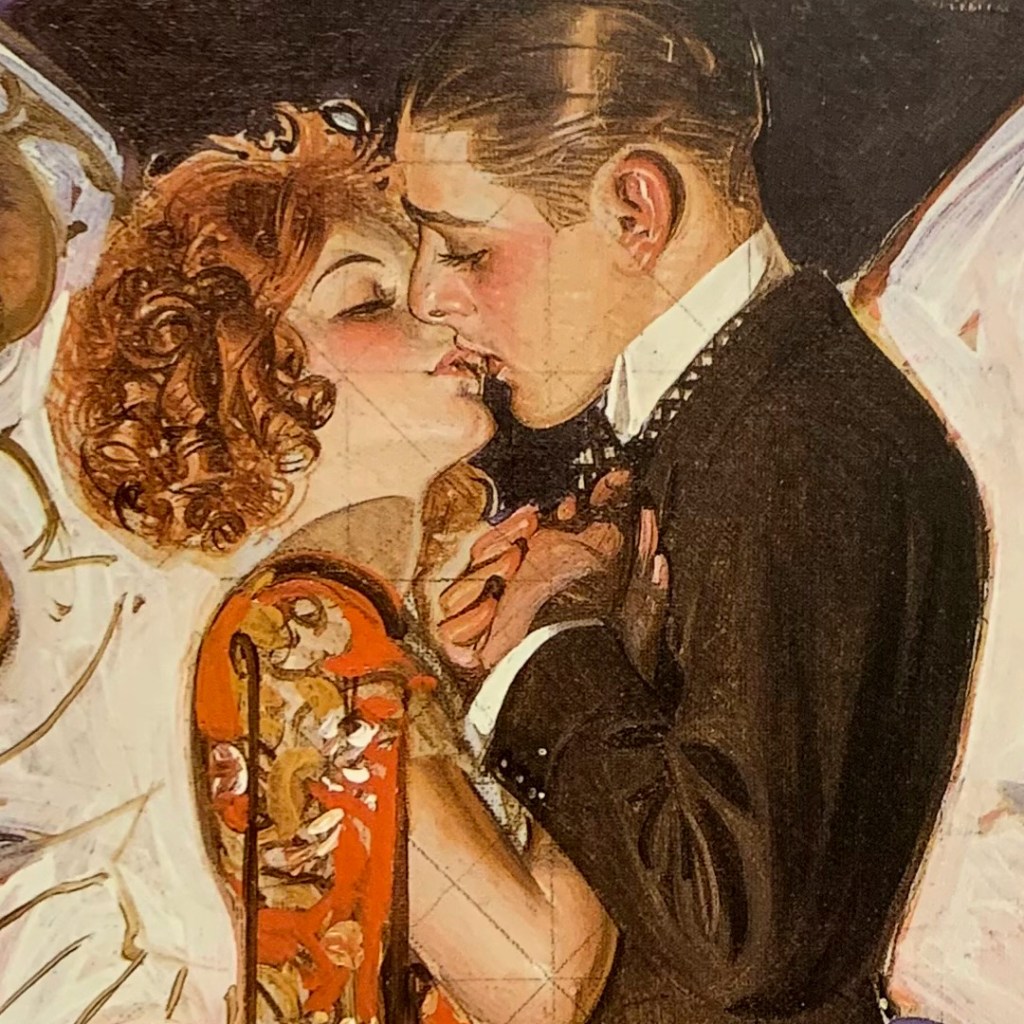
I leaned forward, my nose half an inch from the surface of J.C. Leyendecker’s “First Airplane Flight,” visually scanning the painting, mentally deconstructing the layers of his workflow:
The contradictory relationship between Leyendecker’s mechanically precise line art and subtle washes of underpainting…
That iconic, rhythmic pattern in his midtones…
The sharply stylized highlights and shadows…
“Florist” by J.C. Leyendecker
An eccentric man with a silver beard and straw hat slid up next to me and asked:
“How’s it smell?”
I sort of laugh-snorted and explained my enthusiasm in hopes of engaging him in a collaborative geek-out.
“I’ve never seen one in person before.”
I resumed making out with Leyendecker.
“Yeah, he’s hard to find. I’ve only seen his work in person a couple times.”
“I can’t believe how perfect it is. There’s not a single correction.”
I exhaled as I spoke because, in my amazement, I kept forgetting to breathe.
Then, with his response, that mysterious, Scarecrow-Santa-Claus forever changed the way I think about art.
“Of course, there isn’t. He’d already painted it twice.”
Color comp for J.C. Leyendecker’s “Butterfly Couple”
My mind flooded with memories of all the Leyendecker value studies, color comps, and preparatory sketches I’d studied from art school onward.
That’s why Leyendecker’s work and the work of every other classic illustrator (Dean Cornwell and Norman Rockwell among them) on display that day was so confident and precise.
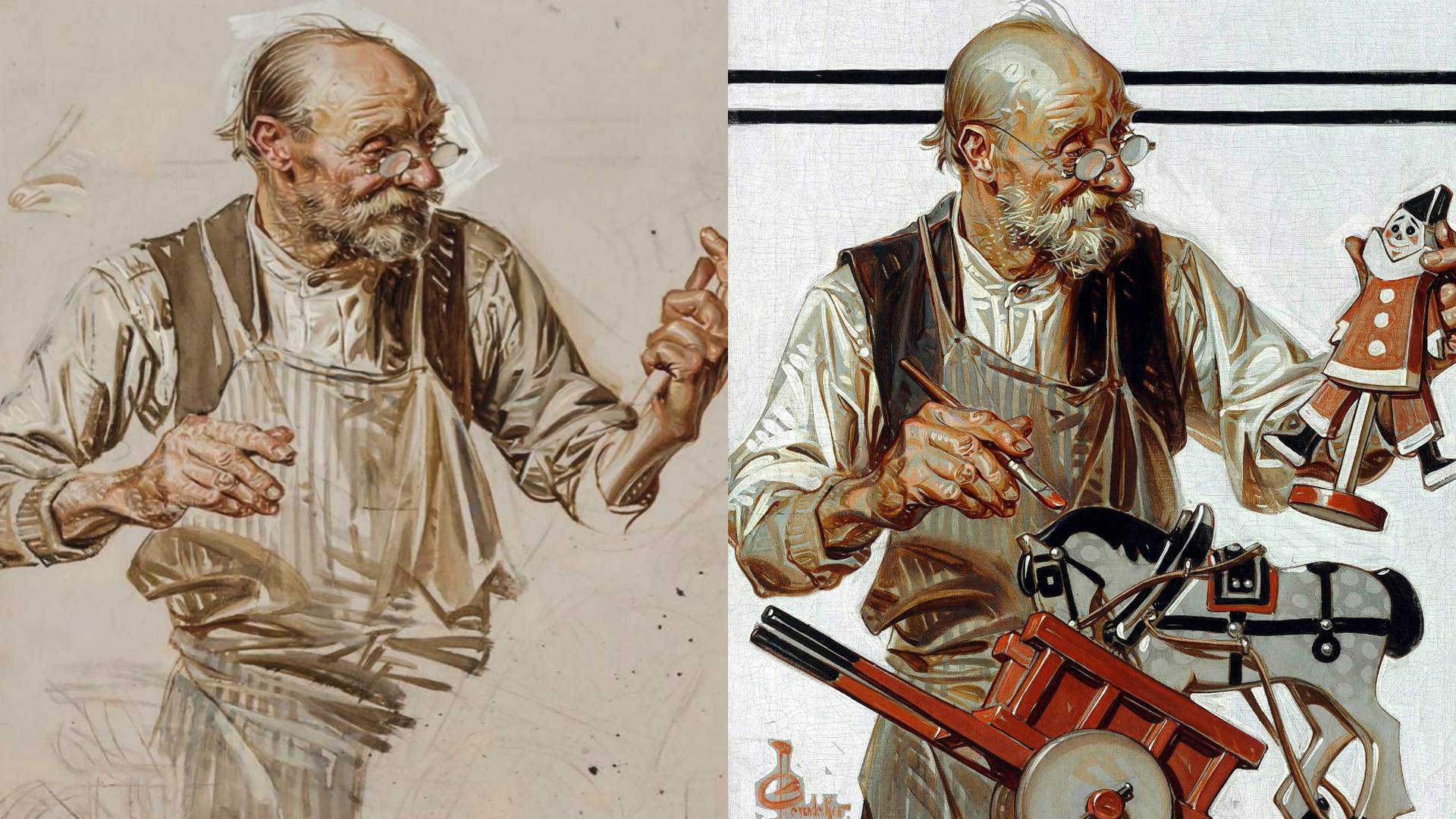
They literally prototyped their illustrations prior to creating what would be considered the “final” work.
…and why wouldn’t they?
Side-by-side comparison of the comp and final illustration for J.C. Leyendecker’s “Toy Maker”
They weren’t successful illustrators because they had good taste. They were successful illustrators because they hit their deadlines and delivered high quality work consistently.
But somehow, the rapidity of digital techniques often makes our modern day workflows less efficient.
Sure, it’s easy to open a blank file and start drawing, painting, or writing anytime we want, but without proper planning and preparation, our attempts at anything more ambitious than what we already have memorized lead to unnecessary struggle.
…which wastes time and energy.
…and increases the likelihood that we’ll get stuck.
Detail of a value study by J.C. Leyendecker
Musicians record demo versions of their songs to save on studio time. Architects design buildings with foam core and/ or polystyrene models. Dancers and stage actors hold dress rehearsals…
Where is the benefit for digital artists who abandon the tried-and-true commercial art practices of value studies, color comps, preparatory sketches, and mock-ups, or for visual storytellers who begin without any sense of the end?
Today, we’ll talk about how to de-stress your creative process by investing more time and energy into the preparatory stages.
I’ll share three major benefits of this kind of prototyping and provide examples for each one…
Pixar Animation Studios was always known for quality storytelling, but in the early years of CG feature animation, they also set the standard for design.
Monsters Inc.
CG feature animation was considered by many (even mainstream audiences) inherently inferior until the turn of the 21st century.
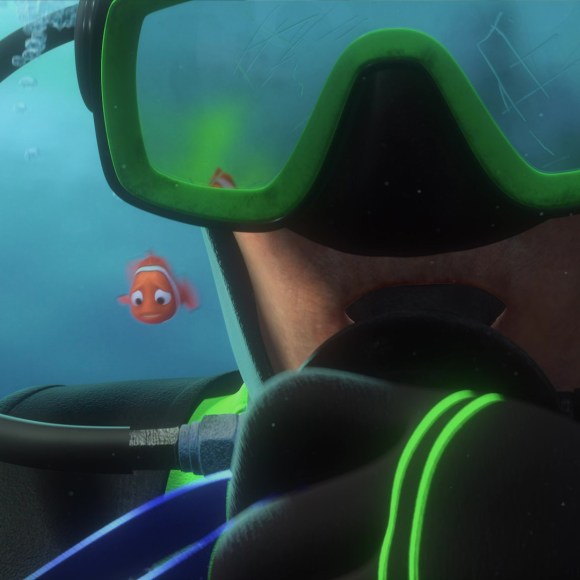
The fur and lighting effects in Monsters, Inc. were remarkable in 2001 (and they still hold up) but in 2003, Finding Nemo’s visual art finally and fully transcended the technological limitations of the new medium.
When interviewed about how they created such stunning imagery, the Pixar artists often cited their meticulous research.
Finding Nemo
Whether it was sketching professional ballet dancers in preparation for Fantasia’s dancing hippo sequence, living in Latin America for months at a time during development for Saludos Amigos and The Three Caballeros or hiring legitimate apex predators as models for The Lion King, Disney artists were willing to do whatever it took to achieve their characteristic verisimilitude.
…so why wouldn’t Pixar?
They got the Nemo art team certified for scuba diving. The Up artists flew to Venezuela to paint the world’s tallest waterfall. The Cars crew went on an epic road trip across the legendary US Route 66, the Ratatouille team wined and dined at fancy restaurants in Paris…
Toy Story 3
…and the Toy Story 3 team toured…
…landfills.
That’s right…
The Nemo people swam around a coral reef.
…and the Toy Story 3 people swam around in literal human garbage.
…but the movie probably wouldn’t have created the cultural phenomenon it did if the artists hadn’t been so committed to authenticity.
This is the second in a three-part lesson for artists who are ready to develop effective professional practices upon which they can depend for efficiency, consistency and quality in their work.
Today we’ll talk about the importance of working from reference – even when it stinks.
We’ll bust five common myths about reference.
…myths that if left un-busted put your portfolio at risk of landing in the trash.
The story goes that one night, during a typically aggressive performance, he lost a callus. On break, the club owner found “SRV” in the dressing room, super-gluing the flapping callus back onto his finger so he could finish the show.
I tried it.
It worked until the MacGyver’d callus on my pinky finger broke again a few days later. The dried super-glue prevented the worsened wound from closing so it took forever to heal.
…but for a few precious moments, dancers thought I was the cool one.
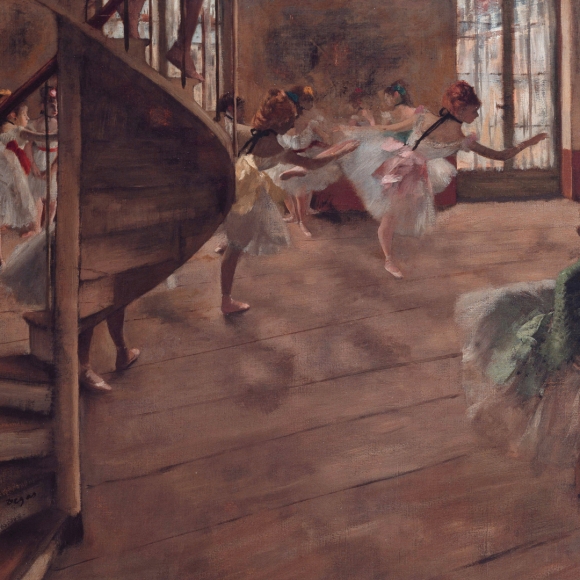
Then they laced-up their ballet shoes and took their starting positions for rehearsal.
The rowdy group grew still and silent.
The coach counted off.
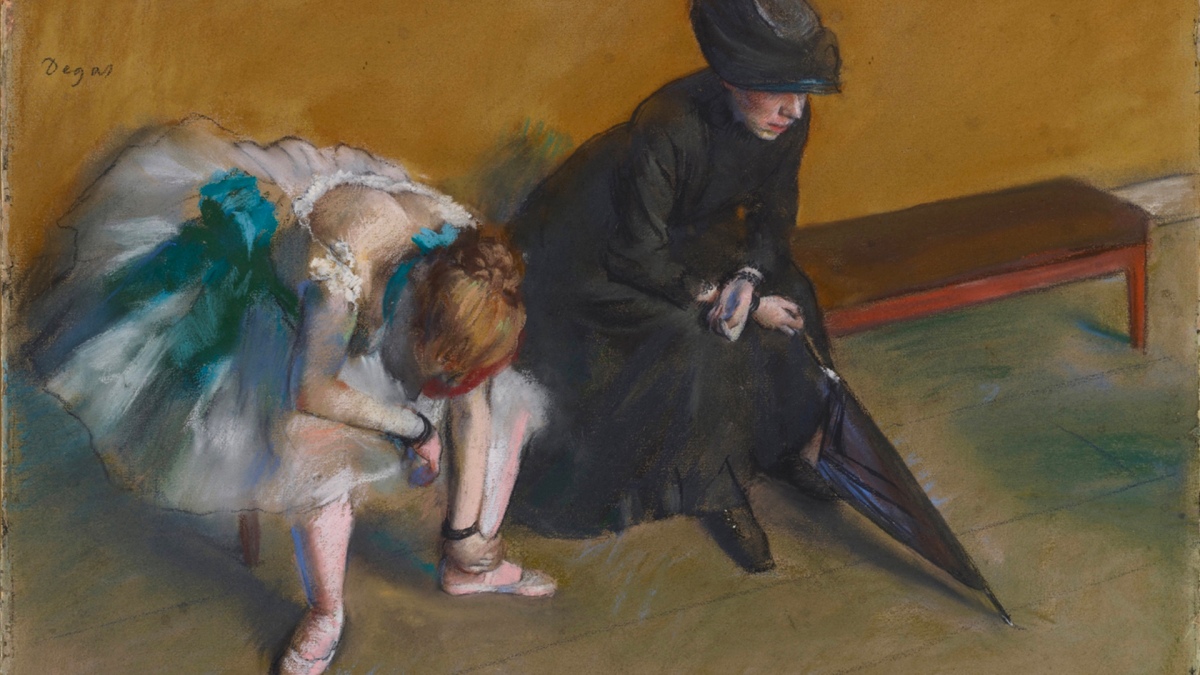
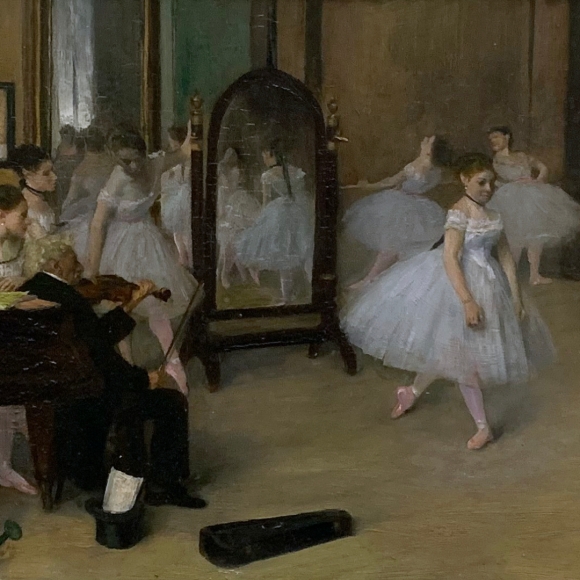
Edgar Degas
…and for a few measures, they filled the room with magic.
…until one dancer tripped, collided with another and everyone had to start over.
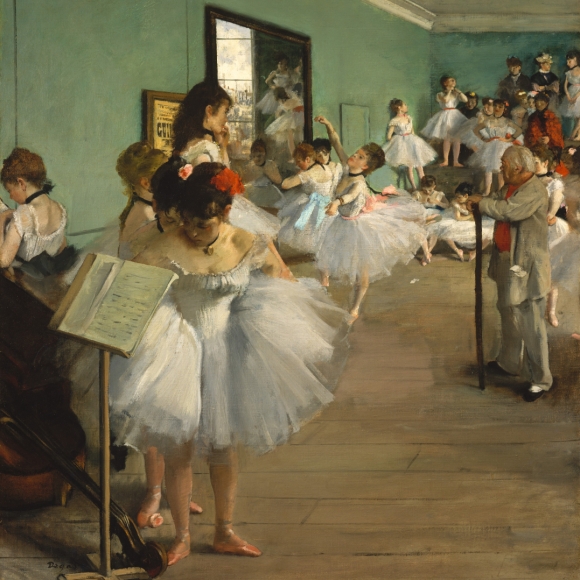
My point is that when people think of ballet dancers they think of the elegance, beauty and effortless impression seen on stage.
The audience sees the satin shoes.
…but not the swollen, purple feet inside.
One of the most important mindset shifts in the career of any professional artist is a shift in focus from performance to practice.
…from the stage to the studio.
Edgar Degas
Our culture has a very bad habit of promoting performance while obfuscating the practice behind it.
This habit skews expectations, scatters attention and stifles patience.
…and it’s not just a social media problem.
Social media is, obviously, a big part of the problem now.
…but effective practice has always tested our patience.
…because almost nobody applauds the process.
…but without effective practice, there’s no performance.
…no stage without the studio.
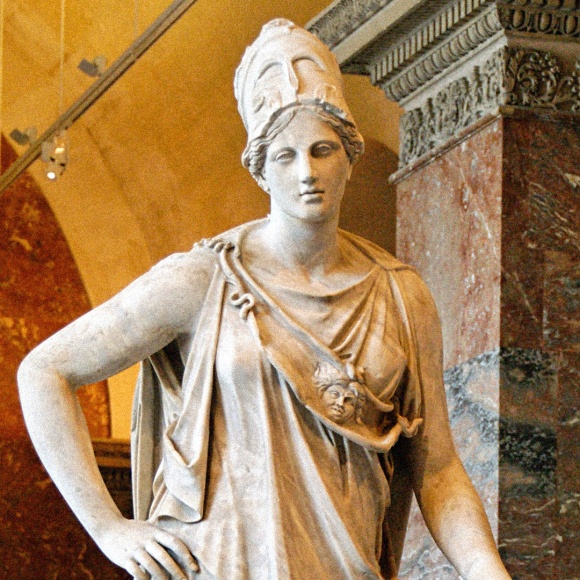
Athena
So this is the first of a three-part lesson for artists who are ready to develop effective professional practices upon which they can depend for efficiency, consistency and quality in their work.
Today, we’ll begin by busting six common myths about practice.
…myths that, if left un-busted, can lead to physical injury, damage to our mental health, wasted time and energy, burnout or rage quitting.









 The Magic Box